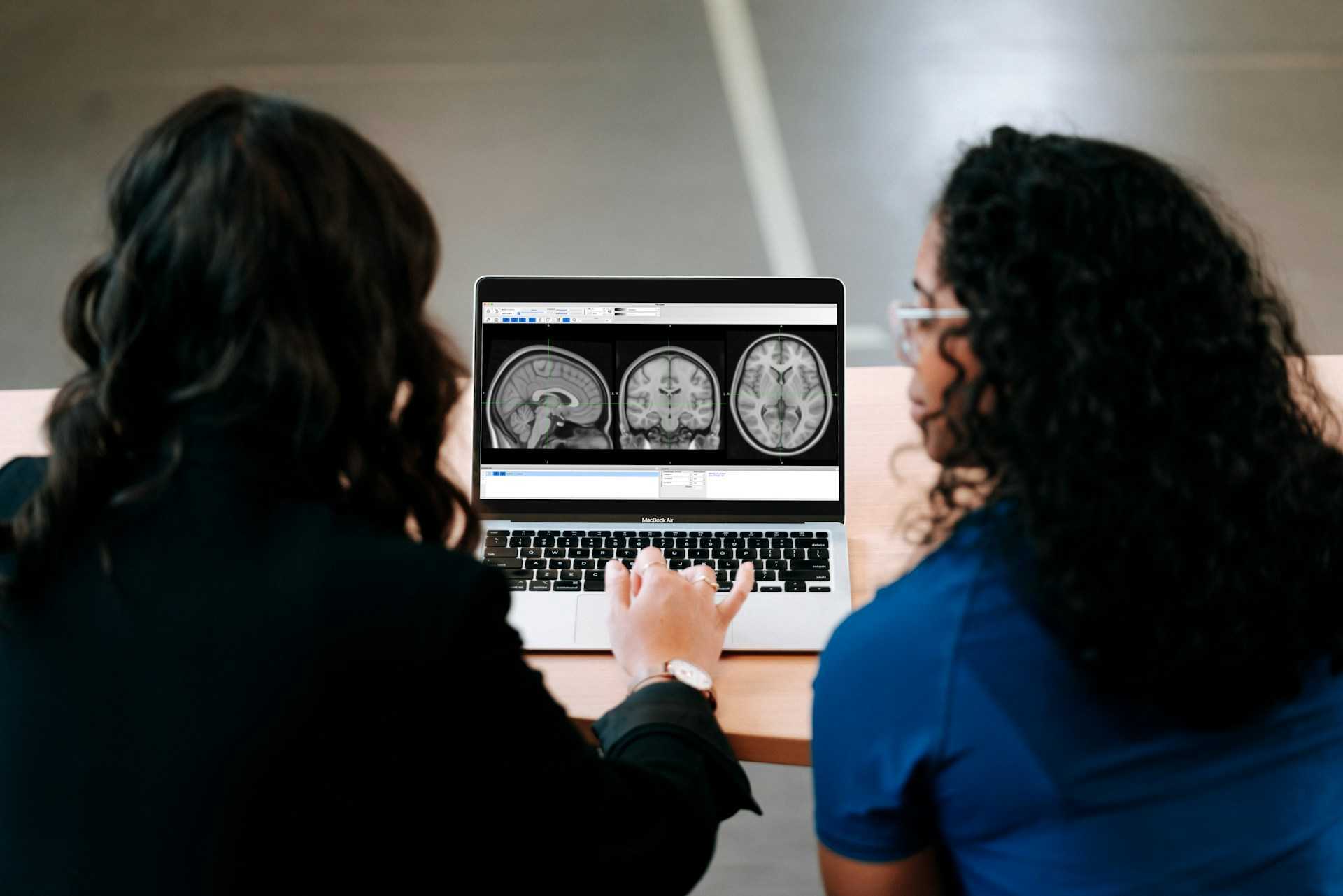

Healthcare providers face a difficult challenge. Early symptoms are often subtle. Manual review can also introduce inconsistencies. As a result, detecting dementia early becomes more difficult. Delayed identification may reduce opportunities for timely intervention. This makes the early detection of dementia a critical priority.
DynaTech's solution uses AI-powered analysis of brain scans. It supports standardized review across MRI and CT imaging. Using AI for dementia analysis helps reduce observer bias. The platform combines medical imaging AI with clinical decision support capabilities.
The solution focuses on identifying patterns linked to cognitive decline. AI dementia detection helps healthcare teams review scans with greater consistency. Advanced AI MRI analysis supports research-grade evaluation of medical images. Together, these capabilities strengthen efforts to detect dementia early and improve early detection.
Why Traditional Brain Scan Reviews Miss What AI Can Detect
Traditional brain scan reviews depend heavily on human observation. Healthcare teams work with large volumes of imaging data. Subtle indicators can be difficult to identify consistently. Questions such as how to detect dementia early often remain challenging when signs are not obvious.
Manual reviews can also vary between specialists. This creates differences in interpretation and reporting. When organizations explore how to detect early dementia, consistency becomes just as important as speed. DynaTech's solution addresses this challenge through standardized AI-powered analysis.
Unlike conventional approaches, the platform focuses on reducing observer bias. It supports healthcare professionals with research-grade analysis and clinical decision support. This creates a more structured review process across MRI and CT scans.
Key Differences include:
- Supports AI dementia diagnosis through standardized image analysis
- Uses medical imaging AI to evaluate brain scan data consistently
- Applies early detection algorithms across MRI and CT imaging
- Provides clinical decision support during scan assessment
- Reduces observer bias during image interpretation
- Supports HIPAA-compliant healthcare environments
- Delivers research-grade analysis capabilities
- Strengthens AI for MRI analysis workflows across healthcare organizations
- Enables AI brain MRI analysis for earlier identification opportunities
- Helps teams answer questions such as how to detect dementia early with greater confidence
The result is a more consistent approach to scan evaluation. Healthcare teams gain additional support when reviewing indicators of cognitive decline. This improves efficiency while supporting earlier clinical decision-making.
The AI Capability Framework Behind Earlier Cognitive Decline Detection
Healthcare organizations need more than image processing. They need consistent analysis. They need reliable support. They also need tools that strengthen clinical decision-making without increasing complexity.
The following capabilities work together to support early detection of dementia. They help standardize reviews and support the early detection of dementia. The platform combines advanced imaging analysis with decision support capabilities.
1. Medical Imaging AI
Medical imaging AI analyzes MRI and CT brain scans. It helps healthcare teams review imaging data consistently.
Key Capabilities include:
- Supports AI MRI analysis across brain imaging studies
- Evaluates imaging data using standardized methods
- Reduces variability in scan interpretation
- Strengthens research-focused review processes
- Helps teams explore how to detect early dementia
2. Early Detection Algorithms
Early detection algorithms focus on identifying subtle indicators of cognitive decline. This supports earlier clinical awareness.
Key Capabilities include:
- Supports AI dementia detection through structured image analysis
- Identifies patterns before symptoms significantly escalate
- Improves consistency across scan evaluations
- Assists healthcare teams during review workflows
- Helps address questions such as how early dementia can be detected
3. Clinical Decision Support
Clinical decision support provides additional intelligence during scan assessments. It helps professionals make more informed evaluations.
Key Capabilities include:
- Supports AI for dementia initiatives within healthcare environments
- Delivers additional context during image reviews
- Helps standardize diagnostic assessments
- Supports more confident clinical decisions
- Reduces uncertainty during interpretation
4. HIPAA-Compliant Environment
Healthcare organizations require secure and compliant solutions. The platform supports healthcare-focused operational requirements.
Key Capabilities include:
- Supports secure handling of imaging information
- Aligns with HIPAA-compliant healthcare environments
- Enables standardized analysis processes
- Supports responsible use of healthcare AI solutions
5. Observer-Bias Reduction
Observer bias can create inconsistencies across manual reviews. The platform helps create a more standardized approach.
Key Capabilities include:
- Reduces interpretation differences between reviews
- Improves consistency across imaging assessments
- Supports structured evaluation workflows
- Helps strengthen diagnostic confidence
6. Research-Grade Analysis
Research-grade analysis supports deeper evaluation of imaging studies. It provides consistent analytical support across healthcare teams.
Key Capabilities include:
- Supports AI-assisted MRI brain evaluation workflows
- Enables standardized review of brain imaging data
- Supports healthcare research initiatives
- Delivers consistent analysis across imaging assessments
DynaTech's AI-Powered Approach to Earlier Cognitive Decline Detection
The Problem It Solves
Early indicators of cognitive decline can be difficult to identify consistently. Symptoms may remain subtle for long periods. Manual image reviews can also introduce differences in interpretation. This creates challenges for organizations exploring how to detect dementia early.
Healthcare providers need reliable ways to support timely evaluations. They also need standardized review processes across imaging studies. Questions around how early can dementia be detected often require deeper image analysis. Delayed identification may reduce opportunities for earlier action.
DynaTech addresses these challenges through structured imaging analysis. The solution supports detecting dementia early while reducing observer bias during reviews.
What the Agent Does
The solution analyzes MRI and CT brain scans using AI-powered technologies. It supports healthcare teams with standardized image evaluation. AI for MRI analysis helps create greater consistency across scan reviews.
The platform combines medical imaging AI, clinical decision support, and research-grade analysis. It supports AI dementia diagnosis by identifying relevant imaging patterns. AI dementia detection capabilities help healthcare organizations review scans with greater confidence while reducing interpretation variability.
Agentic Scenarios
Scenario 1: Standardized Brain Scan Review
- User Query: "Can we improve consistency across brain scan evaluations?"
- Agent Action: The solution performs structured image analysis and supports observer-bias reduction. It delivers standardized insights across imaging assessments.
Scenario 2: Earlier Cognitive Decline Assessment
- User Query: "How can we strengthen the early detection of dementia?"
- Agent Action: The platform analyzes MRI and CT scans for subtle indicators. It supports healthcare teams through research-grade analysis and clinical decision support.
Scenario 3: Advanced Imaging Evaluation
- User Query: "Can AI help review complex brain imaging studies?"
- Agent Action: The solution uses AI brain MRI analysis capabilities to evaluate imaging data consistently. A custom CNN model supports underlying analysis workflows while maintaining standardized review processes.
The Operational Value of AI-Powered Dementia Detection
| Business Challenge | AI-Powered Impact |
| Early symptoms are difficult to identify consistently. | Supports early detection of dementia through standardized image analysis. |
| Manual reviews may introduce interpretation differences. | Reduces observer bias across MRI and CT scan evaluations. |
| Delayed identification limits intervention opportunities. | Strengthens the early detection of dementia through structured analysis. |
| Healthcare teams need consistent review processes. | Clinical decision support improves evaluation consistency. |
| Large imaging volumes increase review complexity. | AI MRI analysis helps streamline imaging assessments. |
How It Works Technically
- Brain scans are collected in DICOM-supported formats.
- MRI and CT images enter the analysis workflow.
- Azure AI Vision processes imaging information.
- Azure Machine Learning supports analytical evaluation.
- Azure OpenAI helps organize clinical insights.
- Medical imaging AI consistently evaluates scan patterns.
- Early detection algorithms support the assessment of cognitive decline.
- Clinical decision support assists healthcare professionals.
- Research-grade analysis strengthens review quality.
- The solution helps answer questions such as "Can AI read MRI scans?"
Who Benefits
- Healthcare Providers: Gain more consistent support during brain scan evaluations.
- Radiology Teams: Improve consistency across MRI and CT image assessments.
- Clinical Specialists: Access clinical decision support during imaging reviews.
- Healthcare Organizations: Standardize imaging analysis across multiple review workflows.
- Research Teams: Benefit from research-grade analysis for imaging studies.
- Healthcare Leadership: Support broader AI for dementia initiatives across the organization.
Ready to Strengthen Early Dementia Detection?
Discover how AI-powered brain scan analysis can support earlier identification, reduce observer bias, and improve review consistency. Speak with DynaTech's experts to explore the right approach for your healthcare environment.
What Deploying This Agent Actually Looks Like
Deployment is designed to fit existing healthcare workflows. The solution connects imaging analysis capabilities with standardized review processes. Organizations focused on detecting dementia early can adopt the platform without altering established clinical evaluation methods.
The solution uses Azure AI Vision, Azure Machine Learning, Azure OpenAI, and DICOM. It supports the early detection of dementia through structured image analysis. Healthcare teams also gain access to AI for dementia capabilities that reduce observer bias and support consistent decision-making.
The Return Is Measurable, Not Theoretical
Healthcare organizations benefit from greater consistency across imaging reviews. AI dementia detection helps standardize analysis while supporting clinical teams. This creates a more reliable process for identifying potential indicators of cognitive decline.
AI MRI analysis helps reduce variability between assessments. Organizations exploring how to detect dementia early gain additional analytical support. The result is a more structured approach to brain scan evaluation and decision support.
Frequently Asked Questions
What is the primary purpose of this solution?
The platform supports healthcare teams reviewing MRI and CT brain scans. It focuses on detecting dementia early through standardized image analysis and clinical decision support. The goal is to help organizations create more consistent review processes while reducing differences in interpretation that may occur during manual assessments.
How does the solution support earlier identification efforts?
The platform uses early-detection algorithms and medical-imaging AI. This supports the early detection of dementia while reducing observer bias across reviews. By providing structured analysis, the solution helps healthcare teams evaluate imaging studies with greater consistency and confidence.
How can healthcare organizations approach the early detection of dementia?
Organizations can strengthen imaging review processes through AI-powered analysis. The solution helps answer questions around how to detect early dementia using structured evaluation methods. It supports standardized assessment workflows for MRI and CT imaging studies in healthcare settings.
Does the platform support AI dementia diagnosis?
The solution provides analytical support for imaging reviews. AI dementia diagnosis efforts benefit from standardized analysis and research-grade evaluation capabilities. Clinical decision support features also help healthcare professionals review imaging data through a more consistent process.
How does AI for MRI analysis improve review consistency?
AI for MRI analysis supports structured assessment of imaging studies. It helps reduce differences in interpretation across MRI and CT scan evaluations. This creates a more standardized review approach and supports healthcare teams working with large volumes of imaging data.
Can AI read MRI scans and support healthcare professionals?
A common question is: can AI read MRI scans effectively? The platform analyzes imaging data and provides clinical decision support for healthcare teams. It helps organize imaging assessments through a consistent framework while supporting observer-bias reduction and research-grade analysis capabilities.
What advanced capabilities are included?
The solution includes AI-based brain MRI analysis, AI-assisted brain MRI evaluation, and research-grade analysis. It can support organizations exploring how to detect dementia early. Additional capabilities include AI for dementia initiatives, AI dementia detection workflows, and support from a custom CNN model. Healthcare teams can also use AI-based MRI analysis to better understand how to detect early signs of dementia.