 13 Feb 2026
Introduction
The modern enterprise data landscape is undergoing a fundamental shift. It’s shifting from fragmented Azure data and AI services towards a unified, intelligent analytics ecosystem powered by Microsoft Fabric. As organizations scale their Azure Data & AI stack, they face various challenges around complexity, cost optimization, data silos, and AI readiness. Microsoft Fabric emerges as a next-generation end-to-end data platform. It consolidates data engineering, data warehousing, real-time analytics, business intelligence, and AI into a single SaaS experience. At DynaTech, we help enterprises with data modernization on Azure, enabling them seamlessly to migrate to Microsoft Fabric to accelerate time to insights and boost business outcomes.
Why Enterprises Are Migrating to the Microsoft Fabric Data Platform
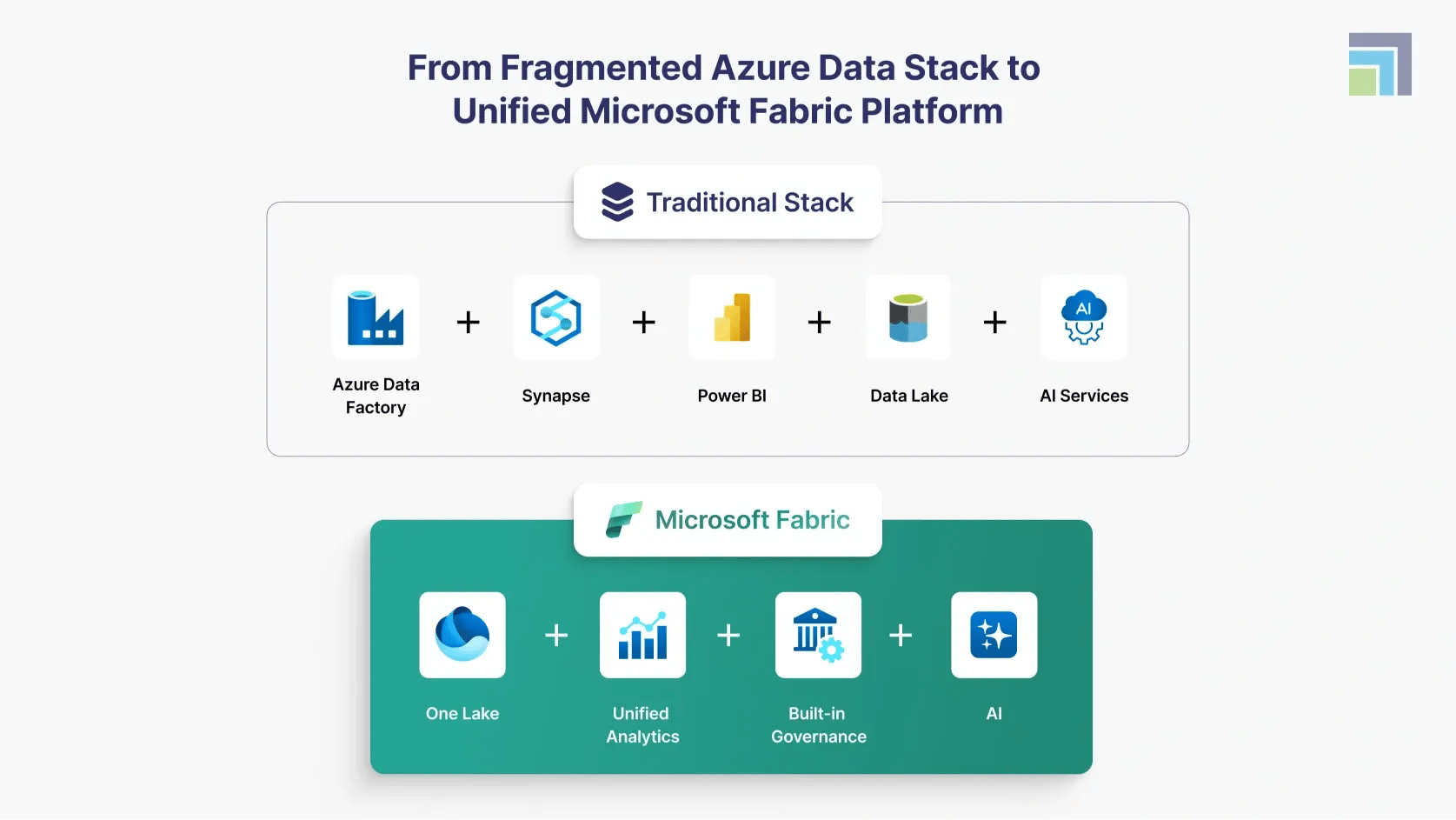
Enterprises built their analytics ecosystems using services such as Azure Data Factory, Azure Synapse Analytics, Azure Data Lake, Power BI, and various other AI tools. While powerful individually, this fragmented architecture has become increasingly difficult to scale and govern. Some of the challenges include:
Complexity Slowing Innovation
Multiple services require independent configuration, monitoring, integration, etc. As analytics workloads grow, teams spend more time maintaining pipelines and infrastructure instead of driving insights.
Rising Costs Across Disconnected Platforms
Consumption-based pricing across several Azure services often results in unpredictable and escalating costs. Redundant storage, parallel compute environments, and continuous optimization efforts significantly increase total cost of ownership.
Data Silos Undermining AI and Analytics
Disconnected lakes, warehouses, BI models, etc. result in inconsistent reporting. In the absence of a unified data foundation, organizations struggle to deliver trusted insights or build any kind of AI-ready datasets.
Governance Challenges at Scale
Managing security and compliance on various Azure services remains complex. Enterprises increasingly require centralized governance frameworks to give the surety of high-end data quality and strict regulatory compliance.
Quick Comparison Table
| Area | Traditional Azure Data Stack | Unified Modern Platform |
| Architecture | Multiple tools | Single integrated platform |
| Costs | Fragmented | Optimized |
| Data Access | Siloed | Unified |
| Governance | Distributed | Centralized |
| AI Readiness | Complex | Built-in |
Microsoft Fabric: A Unified Data & AI Platform Built for Modern Enterprises
Microsoft Fabric represents a strategic evolution in how organizations manage and analyze data on Azure. Instead of operating across disconnected services, Fabric brings data engineering, data warehousing, real-time analytics, business intelligence, and AI workloads into a single and fully integrated SaaS platform. At the core of Microsoft Fabric lies OneLake. It is a unified, enterprise-wide data lake that removes data duplication and silos.
As a next-generation Microsoft Fabric Analytic Platform, Fabric enables unified governance and AI-driven insights across business units. Organizations adopting Microsoft Fabric for Enterprise Analytics gain a centralized environment where data engineering and real-time intelligence operate smoothly within a single SaaS framework. For a deeper enterprise perspective, explore our detailed breakdown of Microsoft Fabric as a unified Data & AI platform.
What Microsoft Fabric Consolidates
Microsoft Fabric effectively unifies capabilities traditionally spread across:
- Azure Data Factory for data integration
- Azure Synapse Analytics for warehousing and analytics
- Power BI for enterprise reporting
- Azure Data Lake for storage
- Built-in AI and machine learning experiences
This consolidation reduces operational overhead and accelerates time-to-insight.
Designed for AI-Ready Data Foundations
Unlike traditional analytics stacks, Microsoft Fabric is engineered with AI at its core. Microsoft Fabric AI capabilities streamline machine learning workflows and make enterprise‑scale AI adoption easier. Governed datasets, real-time analytics, and integrated data pipelines ensure that organizations can:
- Prepare clean, trusted data for AI models
- Operationalize machine learning faster
- Enable intelligent automation across business processes
This makes Microsoft Fabric migration a critical step toward scalable Data + AI modernization on Azure.
Enterprise Benefits at Scale
Organizations adopting Microsoft Fabric typically experience:
- Streamlined data architectures
- Lower infrastructure complexity
- Improved governance and compliance
- Faster analytics and AI deployment
More importantly, leadership teams gain a unified view of enterprise data. This drives smarter, real-time decisions.
Strategic Business Drivers Behind Azure to Microsoft Fabric Migration
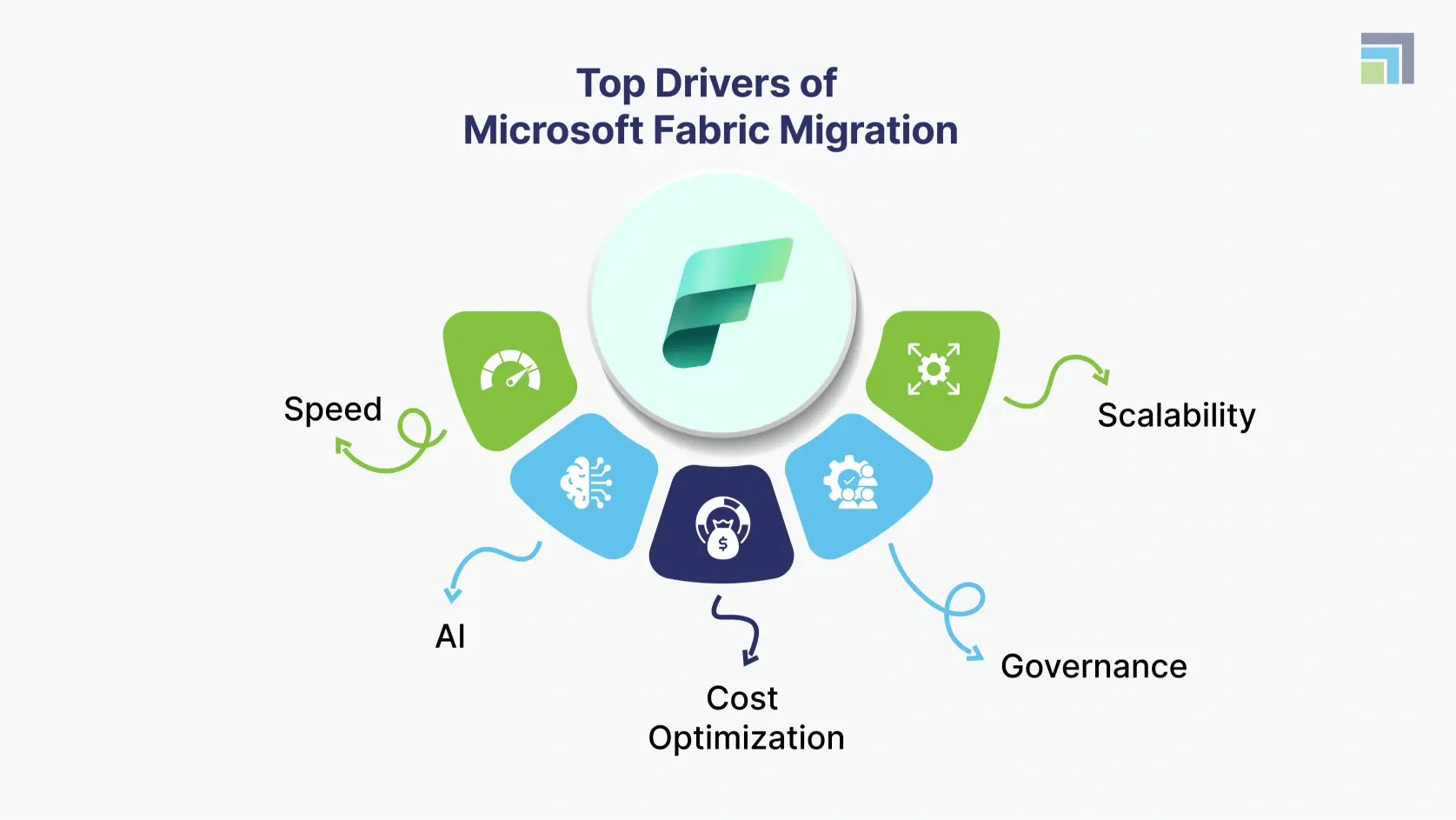
Enterprises are not migrating to Microsoft Fabric simply to modernize technology. They are doing it to unlock measurable business outcomes. The shift from a fragmented Azure ecosystem to the Microsoft Fabric data platform is driven by the need for AI scalability and long-term cost efficiency.
Cloud Analytics Modernization with Microsoft Fabric
With Microsoft Fabric Data Engineering and Microsoft Fabric Data Factory working smoothly together, enterprises can:
- Ingest data from various sources at scale
- Build real-time and batch pipelines with less complexity
- Deliver insights faster across the organization
This integrated approach minimizes time-to-value for analytics initiatives.
For organizations looking to modernize their cloud analytics landscape, DynaTech’s Data + AI Modernization on Azure & Microsoft Fabric framework offers a practical reference model for unifying data and accelerating insights.
Enabling AI-Driven Intelligence Across the Enterprise
One of the most compelling drivers for Microsoft Fabric migration is its built-in AI readiness. Key Microsoft Fabric AI capabilities include:
- Embedded machine learning workflows
- AI-powered analytics experiences
- Real-time intelligence for predictive insights
By removing data silos and automating preparation processes, organizations can magnify AI adoption and improve model accuracy.
Reducing Operational Overhead and Total Cost of Ownership
Migrating from a multi-service Azure stack to Fabric consolidates governance and monitoring into a single platform.
Benefits include:
- Fewer compute environments to manage
- Reduced data duplication across lakes and warehouses
- Simplified security and compliance controls
For many enterprises, Azure to Microsoft Fabric migration results in optimized cloud spending and enhances platform performance.
Improving Governance, Trust, and Compliance
Enterprises gain:
- End-to-end data lineage
- Unified security policies
- Built-in compliance frameworks
This level of control enables leadership teams to scale analytics with confidence and also meet regulatory requirements.
To dive deeper into how enterprises build AI‑ready data governance with Microsoft Fabric, Purview, and MDM, you can explore DynaTech’s detailed guide on modern data governance.
Microsoft Fabric Data Factory vs Azure Data Factory
Microsoft Fabric Data Factory builds on the capabilities of Azure Data Factory but modernizes them within a fully unified SaaS platform. While Azure Data Factory requires managing pipelines across independent Azure services, Fabric Data Factory integrates directly with OneLake. It renders low‑code dataflows and supports no‑infrastructure orchestration inside the Fabric ecosystem. This reduces operational complexity, removes redundant data movement, and also accelerates data engineering workflows.
A Practical Roadmap for Migrating from Azure Data & AI Stack to Microsoft Fabric
A successful Azure to Microsoft Fabric migration requires more than moving workloads. It demands a structured modernization strategy that easily aligns technology with business priorities. Enterprises achieving the strongest outcomes typically follow a phased and risk-managed approach.
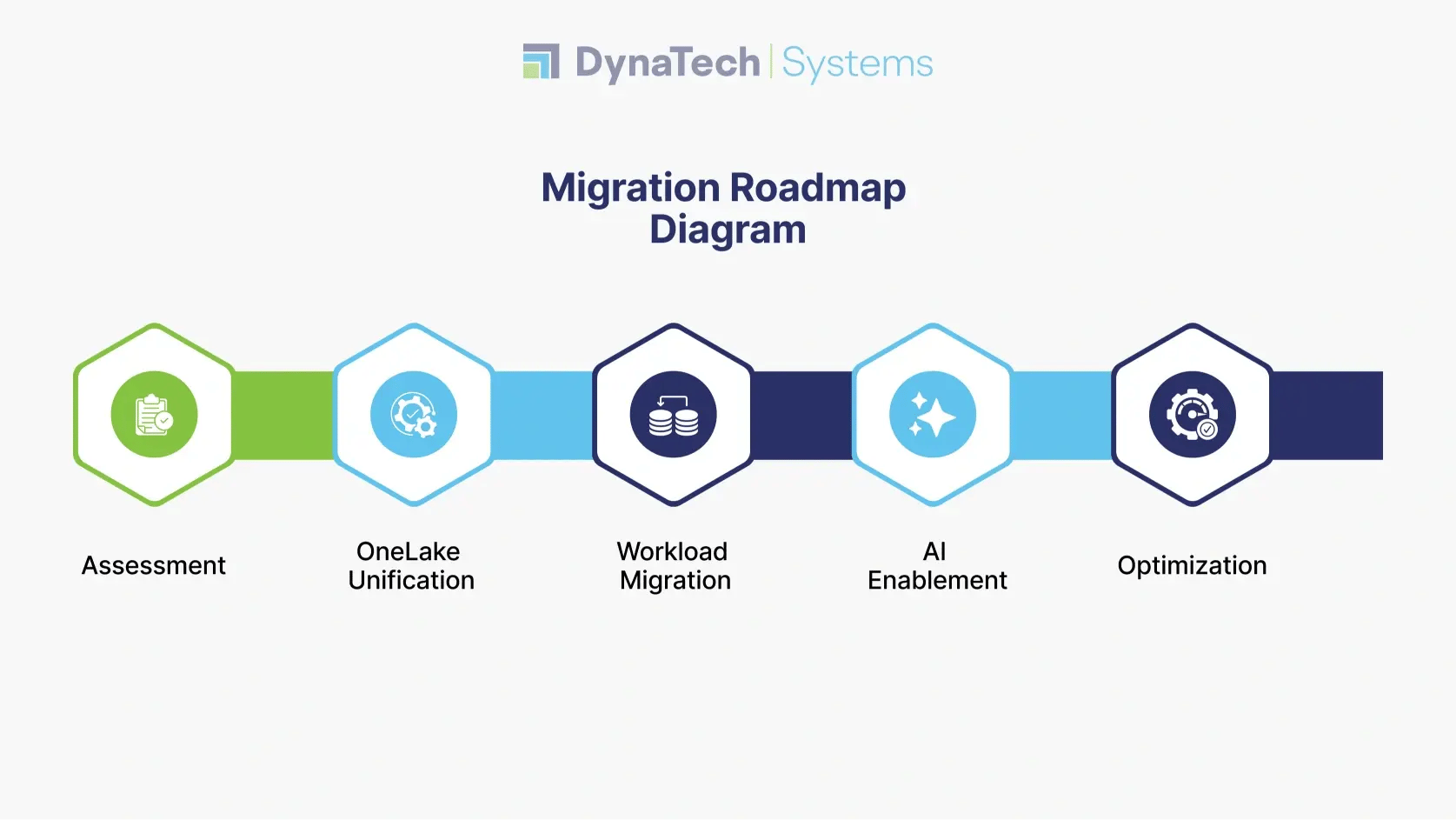
Phase 1: Platform Assessment and Modernization Planning
Organizations start by evaluating their existing Azure data architecture. This includes
- Data pipelines in Azure Data Factory
- Warehousing and analytics workloads in Synapse
- Storage layers across Azure Data Lake
- BI environments in Power BI
This assessment helps to identify performance gaps, cost inefficiencies, and any type of modernization opportunities within the Microsoft Fabric data platform.
Phase 2: Unifying Data Foundations with OneLake
The next step focuses on consolidating enterprise data into OneLake. It is Fabric’s centralized storage layer. It enables:
- Elimination of redundant data copies
- Better data accessibility across teams
- Consistent governance and security
A unified foundation is important for scalable analytics and AI readiness.
Phase 3: Migrating Analytics and Data Engineering Workloads
Using Microsoft Fabric Data Engineering and Microsoft Fabric Data Factory, organizations modernize:
- ETL and ELT pipelines
- Data transformation workflows
- Real-time and batch analytics
This shift accelerates insight delivery.

Accelerate your Microsoft Fabric migration with DynaTech's Expert Data Engineering services
Unify pipelines, optimize transformations, and deliver governed, AI-ready data at scale.
Phase 4: Activating Advanced Analytics and AI Features
Once data is unified and modernized, businesses can use Microsoft Fabric AI capabilities to:
- Deploy predictive analytics models
- Enable real-time intelligence
- Automate decision-making processes
This phase changes data from a mere reporting asset into a strategic growth engine.
Phase 5: Continuous Optimization and Governance
Migration isn’t just a one-time initiative. Ongoing performance tuning, governance enhancement, cost optimization, and other maintenance ensure long-term success across the Fabric ecosystem.
Microsoft Fabric vs Traditional Azure Data & AI Stack: A Strategic Snapshot
As enterprises evaluate modernization paths, the contrast between fragmented architectures and the Microsoft Fabric data platform becomes clear.
| Area | Traditional Azure Data & AI Stack | Microsoft Fabric Platform |
| Architecture | Various independent services | Unified SaaS platform |
| Data Storage | Disconnected lakes & warehouses | OneLake unified foundation |
| Analytics & BI | Separate tools | Built-in, end-to-end |
| AI Enablement | Complex integrations | Native AI capabilities |
| Governance | Distributed controls | Centralized governance |
| Cost Management | Fragmented spend | Optimized consumption |
Key Takeaway:
Traditional Azure stack requires continuous integration and operational effort. On the other hand, Microsoft Fabric migration delivers a streamlined, AI-ready analytics environment. It accelerates cloud analytics modernization with less complexity and more agility.
In A Nutshell
Moving from a scattered Azure Data & AI environment to Microsoft Fabric is more than a platform switch. It’s a smarter way to run analytics across the enterprise. Companies that make the shift to Microsoft Fabric today aren’t just keeping up with technology — they’re building a scalable, insight-driven foundation for long-term growth in a data-first world.
Why Enterprises Choose DynaTech for Microsoft Fabric Modernization
DynaTech is an AI-first Microsoft Solutions Partner helping organizations drive end-to-end Data + AI modernization on Azure and Microsoft Fabric. With proven expertise across industries, DynaTech delivers:
- Strategic Microsoft Fabric migration roadmaps
- Advanced Microsoft Fabric Data Engineering & Data Factory implementations
- Governed analytics and AI-ready architectures
- Cloud cost optimization and performance tuning
- Seamless integration across enterprise systems
From assessment to full-scale modernization, DynaTech ensures enterprises unlock maximum value from the Microsoft Fabric ecosystem.
Start Your Data + AI Modernization Journey with DynaTech
Whether you’re planning a full scale Microsoft Fabric migration, Cloud analytics modernization or modernizing specific analytics workloads, DynaTech helps transform data into a strategic business asset.
Begin your Migration Journey today!