 23 Feb 2026
Modern enterprises are no longer choosing data platforms based on features alone. They are choosing scalability and long-term interoperability. As organizations accelerate AI, real-time analytics, cloud modernization, and the demand for an open, flexible data lakehouse architecture has never been higher. This is where Databricks on Azure continues to stand out. It is now strengthened by Microsoft’s evolving ecosystem and the latest interoperability advancements announced at Ignite 2025. At DynaTech, we help enterprises architect future-ready data platforms that blend innovation with openness. This enables seamless analytics and AI without lock-in. Together, Azure and Databricks are redefining what a truly connected, intelligent data estate looks like.
Why Databricks on Azure Still Matters
Databricks on Azure continues to serve as a high-performance engine within modern lakehouse architectures. Its value goes far beyond data processing. It brings together advanced engineering, AI workloads, as well as, open data standards in a single, enterprise-ready platform.
Advanced Data Engineering at Scale
Databricks simplifies complex data pipelines by combining batch and streaming workloads. That too, with distributed processing optimized for Azure infrastructure. Enterprises can ingest, transform, and prepare massive datasets with high reliability and performance. On the other hand, built-in optimization features minimize processing time and infrastructure costs.
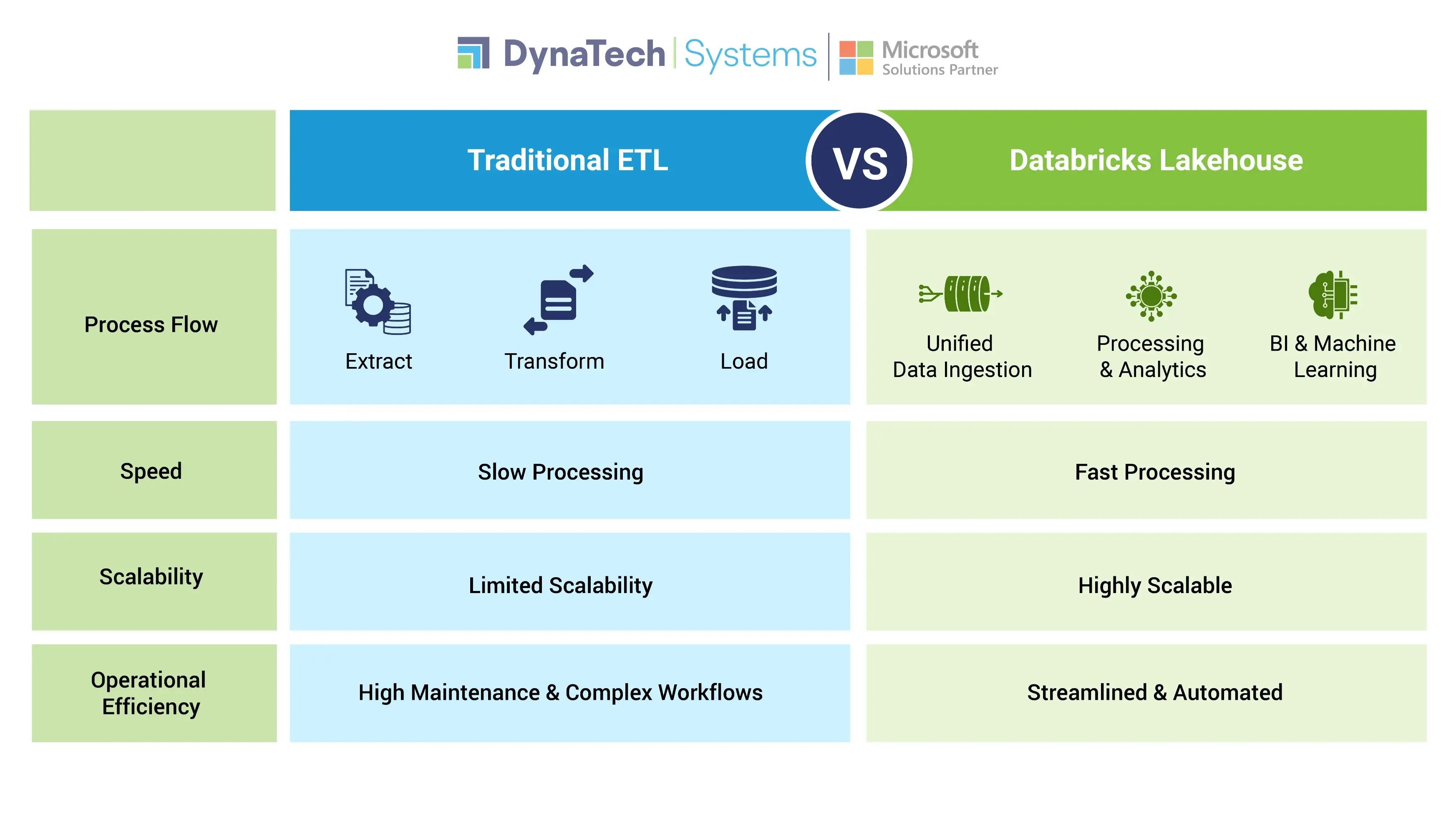
Databricks Lakehouse Platform: Key Capabilities for AI & Engineering
The platform combines data engineering, analytics, and AI into a single unified foundation. It enables faster innovation without data silos. Built to scale on Microsoft Azure, it empowers enterprises to develop, deploy, and govern AI and data workloads with reliability and performance.
Built for AI and Machine Learning
Databricks tightly integrates data engineering with the full AI lifecycle. With native support for model training and experiment tracking, enterprises can move from raw data to predictive insights faster. GPU-enabled clusters and integration with Azure AI services further accelerate advanced analytics and generative AI initiatives. At DynaTech, we enable AI-ready architectures on Azure Databricks. They shorten time-to-insight and ensure enterprise governance.
This is why many organizations standardize on Azure Databricks for enterprise-scale analytics and AI , leveraging the combined strengths of Microsoft Azure and Databricks to build governed, high-performance data platforms that accelerate innovation.
Delta Lake: The Open Standard Powering the Lakehouse
At the heart of Databricks lies Delta Lake. It is an open storage layer that delivers reliability, version control, as well as, high-performance analytics on cloud data lakes. Delta Lake’s ACID transactions and schema enforcement make large-scale data environments trustworthy and production-ready.
Today, Delta Lake also forms the shared foundation across Microsoft’s modern data ecosystem.
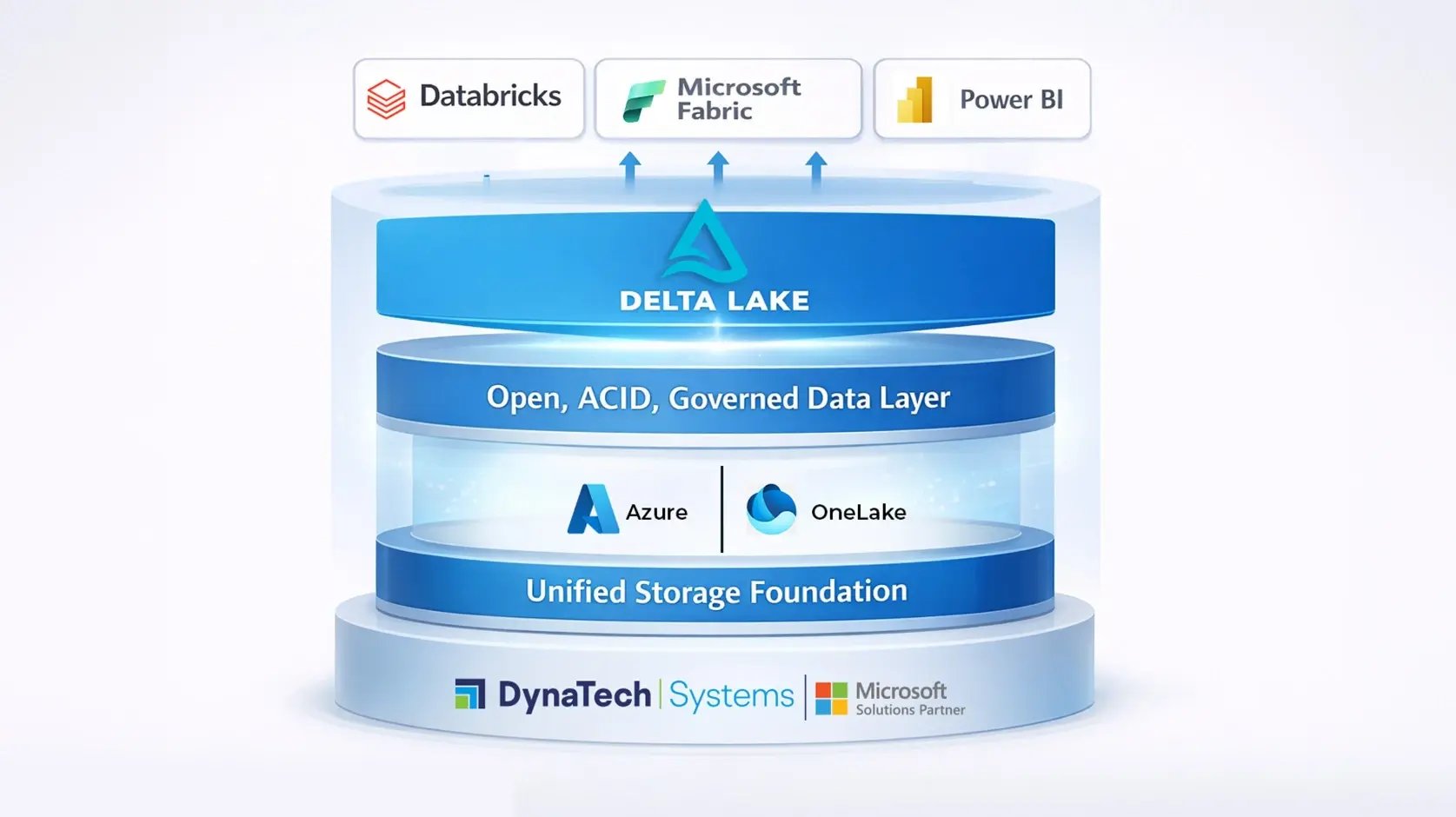
Azure Databricks Architecture in the Modern Enterprise Lakehouse
Running Databricks natively on Azure provides built-in scalability and high-end security. Organizations benefit from enterprise-grade identity management and optimized cloud infrastructure designed for large analytics workloads.
DynaTech helps enterprises design secure and cost-optimized Azure Databricks environments aligned with governance and compliance standards.
Strategic Value Beyond a Single Analytics Engine
The real power of Databricks on Azure lies in its role as a strategic analytics engine within an open data ecosystem — not a siloed platform.
Enterprises leverage Databricks for:
| Use Case | Why Databricks Excels |
| Large-scale data transformation | Distributed Spark processing |
| Real-time analytics | Unified batch + streaming |
| AI/ML pipelines | Native ML tooling |
| Advanced analytics | High-performance compute |
| Open lakehouse architecture | Delta Lake foundation |
OneLake Changes the Architecture, Not the Engine
With Microsoft’s introduction of OneLake and the interoperability announcements at Ignite 2025 , many enterprises assumed this signaled a shift away from existing analytics engines. In reality, OneLake enhances the enterprise data lakehouse by creating a shared storage layer. That too, without replacing platforms like Databricks on Azure .
OneLake acts as a unified data foundation where multiple analytics engines can operate on the same data simultaneously. Instead of copying datasets between platforms, organizations can now leverage zero-copy access. This allows Databricks Lakehouse platform workloads to read and write directly against shared Delta Lake tables.
This architectural evolution delivers several enterprise advantages:
- Removes data duplication across analytics environments
- Minimizes storage and operational costs
- Enables real-time collaboration between analytics engines
- Preserves existing Azure Databricks architecture investments
Rather than forcing re-platforming, OneLake extends flexibility. Enterprises can continue running advanced data engineering and AI workloads in Databricks while enabling BI, governance, and reporting through Microsoft Fabric — all on the same underlying data.
Experience how Microsoft Fabric powers unified data governance and master data management.
Open Lakehouse Architecture Explained
The modern lakehouse is no longer a closed ecosystem. Enterprises now demand open standards that allow multiple platforms to run smoothly across the same datasets.
Key pillars of the open lakehouse include:
-
Open Table Formats
Delta Lake is like a shared, open storage standard. It gives the surety of data reliability and high-end across analytics engines.
-
Open Catalog Standards
With Unity Catalog’s open APIs and Microsoft’s evolving metadata integration, enterprises gain consistent governance and access control on different platforms.
-
Interoperability Across Engines
Analytics and AI, as well as BI tools can now simultaneously work on the same data. That too, without moving or copying datasets. This openness eradicates vendor lock-in while enabling best-of-breed analytics strategies.
At DynaTech, as a Microsoft Solutions Partner , we implement open lakehouse architectures that ensure compliance and scalability. This enables businesses to evolve their analytics stack without disruption.
Microsoft Fabric vs Databricks: How They Complement Each Other
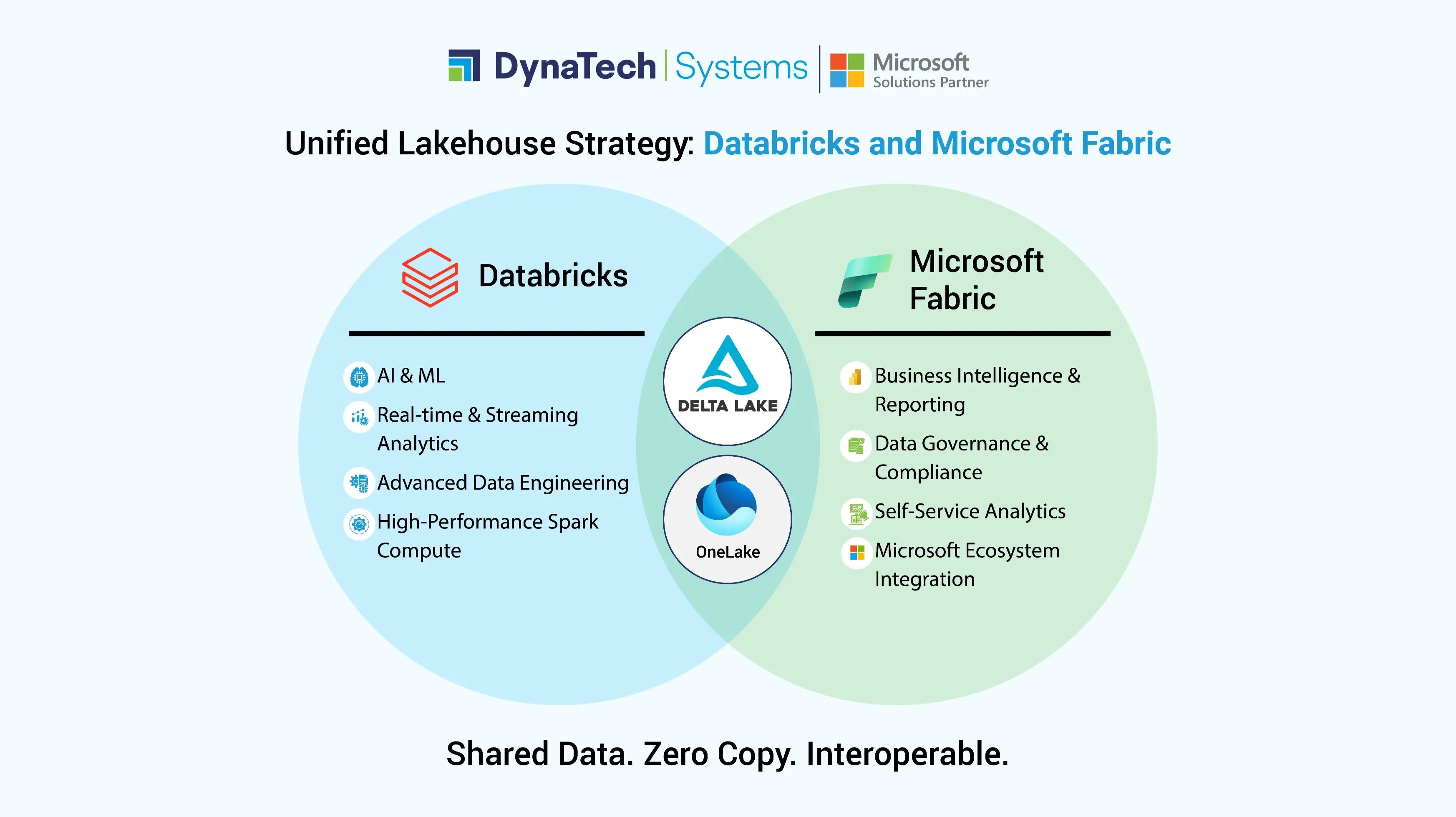
A common enterprise question today is Microsoft Fabric vs Databricks . In reality, the two platforms now work best together.
Many enterprises also include Snowflake in their platform strategy to support specific data sharing, scalability, or multi-cloud requirements. This is why the complete comparison of Microsoft Fabric, Databricks, and Snowflake for enterprise analytics has become an important consideration when defining a unified and future-ready analytics ecosystem.
Use Databricks When You Need:
- Advanced data engineering at scale
- Real-time and streaming analytics
- Machine learning and AI pipelines
- High-performance compute workloads
Use Microsoft Fabric When You Need:
- Unified BI and reporting
- Simplified data governance
- Citizen analytics and self-service insights
- Integrated Microsoft ecosystem experiences
Together, they form a powerful and interoperable analytics ecosystem.
| Capability | Databricks | Microsoft Fabric |
| Data Engineering | Advanced | Core |
| AI & ML | Enterprise-grade | Limited |
| BI & Reporting | Limited | Native |
| Governance | Unity Catalog | Purview integration |
| Open Lakehouse | Delta Lake | Delta Lake |
DynaTech Strategy: We help enterprises design hybrid analytics architectures where Databricks and Fabric coexist. They both are optimized for the workloads they handle best.
What This Means for Existing Azure Databricks Customers
For organizations already invested in Databricks on Azure , the new interoperable architecture delivers immediate value:
-
Investment Protection: No need to migrate or rebuild existing Databricks environments.
-
Reduced Complexity: Unified storage eliminates redundant pipelines and duplicated datasets.
-
Lower Costs: Zero-copy access minimizes storage and data movement expenses.
-
Faster Analytics: Multiple platforms operate on real-time data simultaneously.
Enterprises can modernize incrementally. They can adopt Microsoft Fabric where it adds value and also continues to leverage Databricks’ advanced analytics and AI capabilities.
The DynaTech Advantage
Our modernization frameworks ensure seamless integration, optimized performance, and future-ready lakehouse architectures.
Conclusion: Open, Interoperable Data Estates Are the Future
The evolution of Microsoft’s data ecosystem has not sidelined Databricks. Infact, it has strengthened its role within a truly open and interoperable enterprise data lakehouse .
With shared Delta Lake foundations, zero-copy access through OneLake, and open catalog standards, Databricks on Azure now operates as a powerful analytics engine within a connected data platform.
Enterprises no longer have to choose between different platforms. They can combine the deep engineering and AI strengths of the Databricks Lakehouse platform with the governance and BI capabilities of Microsoft Fabric . That too, while maintaining flexibility and avoiding lock-in.

Ready to build an open, interoperable lakehouse platform on Azure?
DynaTech helps enterprises modernize data architectures using Databricks on Azure, Microsoft Fabric, and open lakehouse standards — driving faster insights, lower costs, and AI-ready analytics.