 24 Dec 2025
For years, BYOD (Bring Your Own Database) powered Dynamics 365 Finance & Operations reporting. It gave teams control over their data. But organizations demand real-time insights. They require cross-domain analytics and AI-driven intelligence. BYOD has a lot of limitations and is becoming more and more evident. Enter Microsoft Fabric. It is a unified, AI-powered analytics platform. And that is reshaping the way D365 data is stored, governed, and visualized. At DynaTech, we have deep Fabric expertise and award-winning D365 capabilities. We help organizations shift from patched-together reporting to a unified analytics layer that actually keeps up with the business.
Download DynaTech’s in-depth Microsoft Fabric Guide — a comprehensive document covering architecture, D365 integration patterns, and governance best practices. (Get your copy now.)
The Rise of BYOD: Flexibility in Reporting, Freedom in Data
When Microsoft introduced Bring Your Own Database (BYOD) for Dynamics 365 Finance & Operations, it changed the way enterprises handled reporting. BYOD allowed organizations to replicate transactional data into Azure SQL. Hence, it allowed teams to completely control the design of their own data models. It also enabled them to integrate third-party BI tools and also build Power BI dashboards— all without impacting the production environment.
It was the perfect solution for its time. It was cost-effective, customizable, and also independent. Businesses could shape reports their way. They were able to refresh data on their terms. They were also able to create domain-specific insights. For many D365 users, BYOD was the bridge between transactional systems and business intelligence.
Inside BYOD Architecture: The Engine Behind D365 Data Replication
BYOD operates as a data export framework within Dynamics 365 Finance & Operations. It replicates structured data from D365 into a dedicated Azure SQL database. Thus, it creates a separate layer for reporting and analytics.
Each data entity within D365 can be mapped to SQL tables through data entity exports. Here, the users can define the scope and schedule refreshes. They can also configure incremental pushes. This mechanism makes sure that production performance remains unaffected. This is because reporting workloads run independently on Azure.
Once replicated tools like Power BI or Azure Synapse Analytics can connect directly to the SQL endpoint. This is done for visualization and aggregation. BYOD depends on entity-based replication instead of direct table access. Thus, it demands continuous maintenance — especially when schema changes or data model updates occur in D365.
This setup offered a fine blend of flexibility and control. But, as data volumes expanded and cross-domain analytics gained traction, its manual upkeep and refresh delays began to limit scalability.
Where BYOD Reaches Its Operational Limit
BYOD did offer reporting autonomy. But it began to show strain. This started happening due to high enterprise data volumes and growing complexity. The manual schema updates and reliance on data entities, along with batch-based refresh cycles, often resulted in delayed insights. Each environment demanded its own Azure SQL database. This increased the maintenance cost and also operational overhead.
Governance required custom rules to ensure compliance and security. This further added to the complexity. As organizations need real-time analytics and unified data visibility, BYOD’s architecture started to limit scalability. This paved the way for Microsoft Fabric’s modern, AI-driven analytics approach.
Microsoft Fabric: A Unified Analytics Layer Built for the Modern D365 Ecosystem
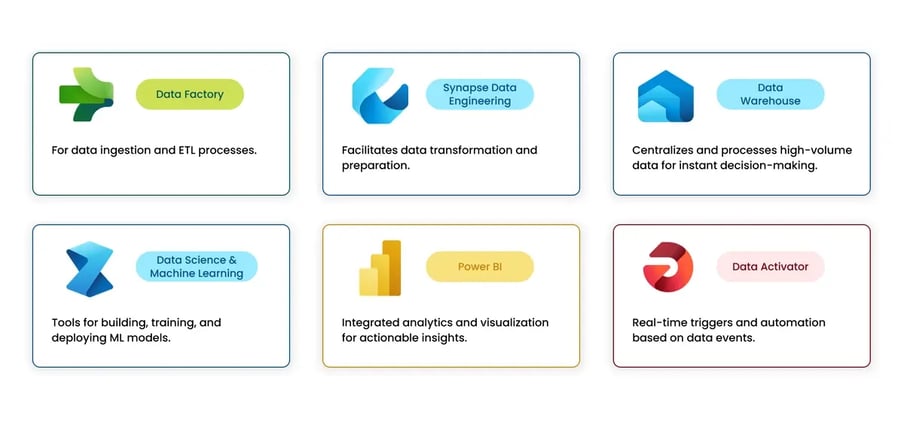
Microsoft Fabric introduces a cohesive analytics foundation. It merges data lake flexibility with data warehouse performance. It is different from BYOD’s decentralized approach. Fabric operates on a unified Lakehouse architecture. Hence, it allows D365 data, unstructured assets, and cross-application sources to coexist in a single governed environment.
Microsoft Fabric completely eradicates the fragmentation caused by slow reporting with the help of built-in near real-time ingestion, AI-powered features through Copilot, and end-to-end governance via Microsoft Purview. It elevates analytics from periodic exports to continuous intelligence. Therefore, it renders enterprises a scalable and SaaS-driven layer. This layer is ready for advanced modeling, automation, and enterprise-wide insights.
What DynaTech Delivers with Microsoft Fabric
- Zero-ETL Implementation
Our team sets up pipelines that move D365 data directly into Fabric without traditional ETL layers, lowering maintenance and ensuring fresher, cleaner datasets. - Unified BI Environment
We design a single analytics workspace where reporting, modeling, and engineering come together — eliminating the patchwork of tools many teams struggle with. - Power BI Embedded Within Fabric
DynaTech configures Power BI to run natively inside Fabric, allowing faster models, tighter security mapping, and smoother governance across your D365 reporting. - End-to-End Version Control
We enable Git-based versioning so your analytics assets have proper branching, approvals, and rollback safety — essential for enterprise-grade reporting. - Centralized Storage with OneLake
DynaTech structures your data in OneLake, ensuring every team works from the same, trusted source without maintaining multiple database copies. - Real-Time Reporting Setup
We implement Fabric’s streaming and Direct Lake capabilities so operational and financial insights surface instantly, not hours later. - AI & Machine Learning Enablement
Our specialists activate ML and Copilot-driven exploration inside Fabric, helping your teams move beyond dashboards into predictive intelligence. - Cost-Optimized Architecture
We design workloads that keep compute under control, automate scaling, and leverage compressed storage formats to reduce long-term ownership costs. - Parquet-Driven Performance
DynaTech configures your data in Parquet for faster queries, lower storage usage, and broad compatibility with Spark, SQL, and BI tools. - Direct Lake Mode for Enterprise Dashboards
We build Power BI models that read directly from OneLake — removing import delays and heavy DirectQuery loads, especially for D365 Finance & SCM. - Governance Built for Scale
Our Fabric setups include Purview-based rules, lineage, and unified access models so data stays secure and compliant across all departments.
Microsoft Fabric vs. BYOD: A Shift from Independent Databases to Unified Intelligence
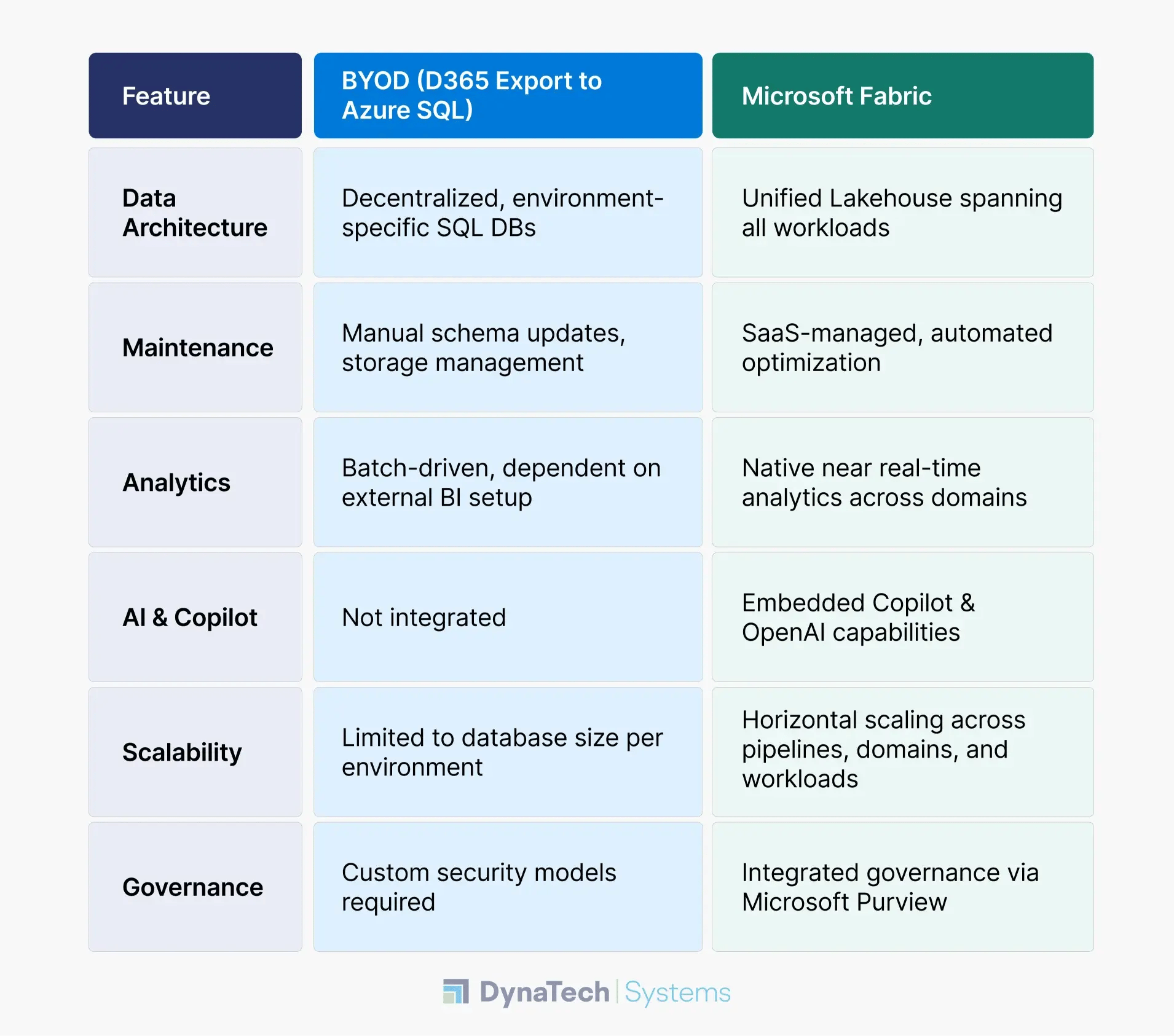
The transition from BYOD to Microsoft Fabric represents more than just a tooling upgrade. It’s an architectural shift. BYOD replicates data into standalone SQL databases. On the contrary, Fabric consolidates analytics into a single, governed Lakehouse. This Lakehouse spans structured, unstructured, and application data. This difference reshapes a lot of things like scalability, governance, AI integration, reporting performance, etc., across the entire D365 ecosystem.
Quick Comparison Overview
Why Fabric Stands Out — And Why Enterprises Turn to DynaTech for Adoption
Microsoft Fabric isn’t just an upgrade to D365 reporting. It is the new foundation for enterprise analytics. By bringing data engineering, data science, real-time intelligence, BI, and governance into a single, SaaS-driven Lakehouse, Fabric eliminates the fragmented pipelines and brittle architectures dependent on BYOD in Dynamics 365 F&O. It also eliminates maintenance overhead that BYOD could never solve. It also removes the heavy maintenance overhead and latency challenges that older D365 F&O data integration models could never fully address.
It's built-in Direct Lake connectivity enables near real-time reporting for D365. Also, Copilot unlocks natural language queries. It also allows automated data prep and AI-powered insights at scale.
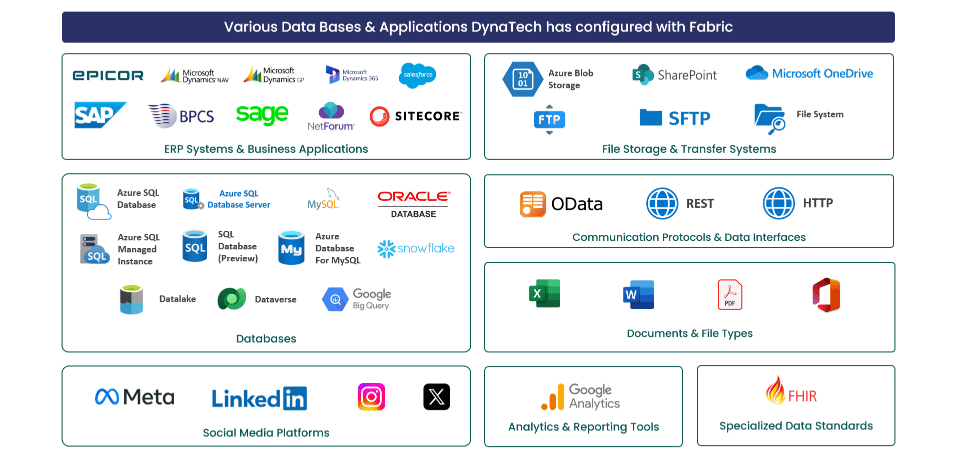
At DynaTech, we help organizations harness the full spectrum of Fabric’s capabilities. This includes everything from setting up Lakehouses and modeling D365 data to implementing governance frameworks, real-time pipelines, and unified analytics experiences. With our expertise across Dynamics 365, Power Platform, Azure, and Microsoft Fabric, we build analytics ecosystems that scale with your business and not around its constraints. Fabric becomes more than just a reporting tool. It becomes your enterprise intelligence layer, engineered and optimized by DynaTech.
Final Thoughts
The shift from BYOD’s isolated SQL exports to Fabric’s unified Lakehouse is a total win-win in D365 reporting architecture. Organizations no longer need to depend on various things like batch refreshes, manual schema work, or fragmented databases to build insights. With Fabric, analytics becomes real-time. It becomes AI-augmented. It’s scalable. And it’s governed by design. That’s exactly what modern enterprises need as data grows in speed and complexity.
For businesses ready to elevate their D365 intelligence layer, Fabric is what they need. The future of D365 reporting and analytics is already here. And DynaTech ensures that the transition is seamless and optimized. We also ensure that this transition is completely aligned with your long-term data strategy. We help you activate Fabric’s full potential and turn your data into a valuable asset that brings better ROI for your business firm.
Begin Your Fabric Journey with Confidence
If you are evaluating Microsoft Fabric as the next step for your D365 analytics, DynaTech, as a Microsoft Soultions Partner can support you with a measured and well-planned approach.