• Home
  • breadcrumb Arrow
  • Blog
  • breadcrumb Arrow
  • Decoding the Pricing Management Feature in...

Decoding the Pricing Management Feature in Microsoft Dynamics 365 SCM

Published on May 29, 2023 | Updated on November 16, 2026
Decoding the Pricing Management Feature in Microsoft Dynamics 365 SCM

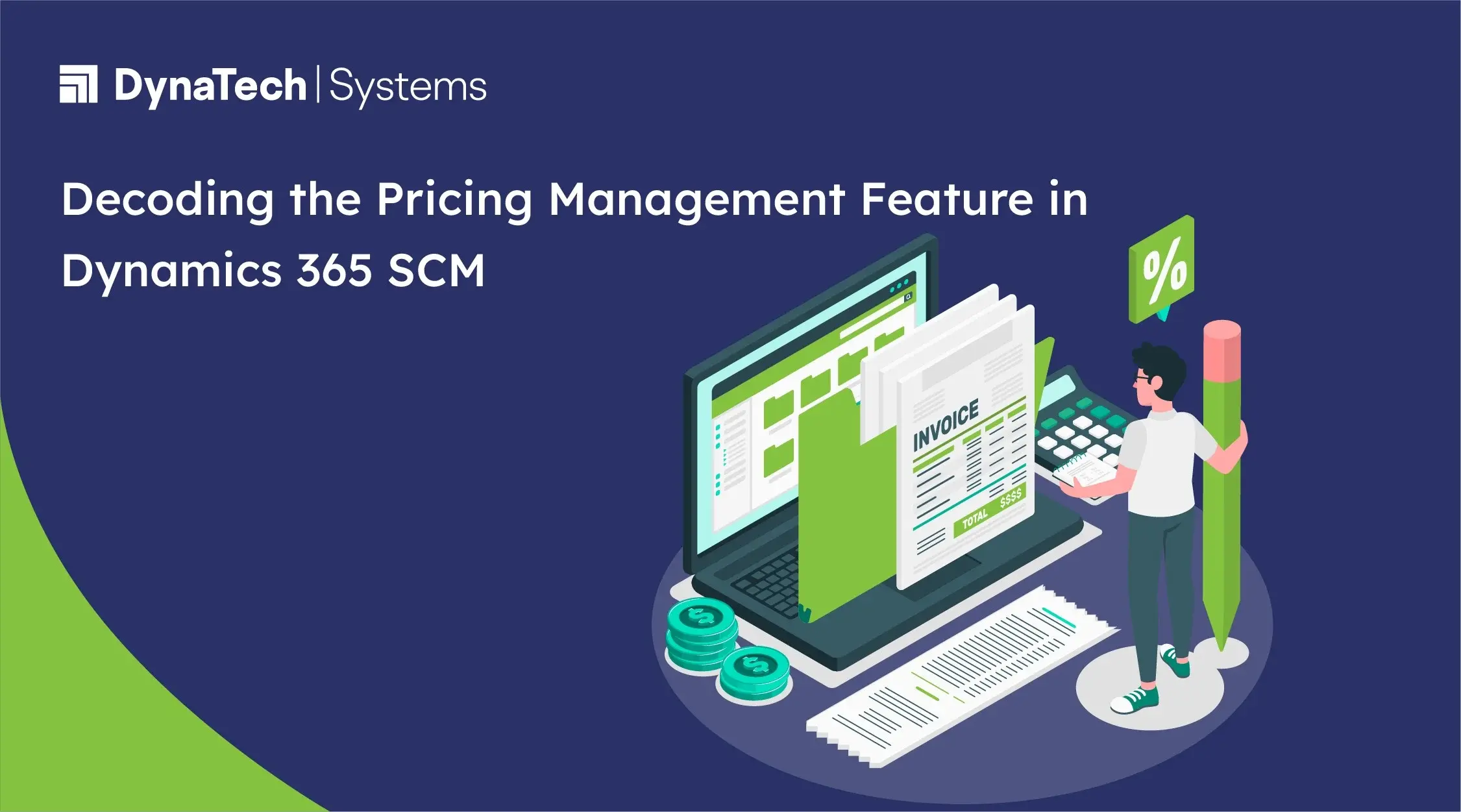
Businesses that manage sales and supply chains often struggle with managing pricing strategies, including list prices, promotions, discounts, and customer agreements. This can be overwhelming for salespeople, but Microsoft Dynamics 365 Supply Chain Management has introduced a solution to address these challenges. The latest addition to Microsoft Dynamics 365 SCM is the Pricing Management feature, which helps businesses efficiently manage their pricing.

Let’s take a closer look at its capabilities and benefits.

Price Structure

In Microsoft Dynamics 365 SCM, pricing is generated using a series of pricing rules and components that are applied to the order during purchase, incorporating price attributes and concurrency control. Pricing Management module offers the option to use a single price structure for each legal entity or multiple price structures if needed.

When multiple price structures are employed, the appropriate price structure can be selected based on transactional attributes. For example, the channel used (web orders, EDI, call center), customer type (wholesale, retail), or promotional event (campaign ID) can all be utilized to determine which price structure to apply.

Price Attributes

Price attributes are a gamechanger for companies to tailor their pricing strategies based on individual customers and product attributes. This feature allows organizations to build a personalized and targeted pricing structure that takes into account the exclusive requests and preferences of their customers.

Price attributes can be set at various levels like Prices, Margin component price adjustments, Discounts, Charges, Rebates, and more.

This allows businesses to adjust pricing that best suits their elusive needs. Whether companies want to deliver volume discounts or offer targeted promotions to specific customer segments, it can be managed efficiently. By getting the grasp of the attribute framework for customer, sales order, and product attributes; businesses can configure price attributes to meet their exclusive requirements.

Organizations can easily adjust their prices in response to changing market conditions or consumer demands, thanks to the flexibility and adaptability of Microsoft Dynamics 365 SCM. With the option to apply price attributes at both the order header and order line level, businesses can create a targeted pricing strategy without needing to create separate prices and discounts for individual items and customers. This not only simplifies pricing management but also ensures consistency in pricing across all channels and customer segments.

A practical example is a cable maker managing LME-linked metal pricing in D365, demonstrating how manufacturers can handle fluctuating metal prices and maintain better pricing control through Microsoft Dynamics 365. 

Strengths of Pricing Management module of Microsoft Dynamics 365 Supply Chain Management

1. Higher Return on Investment

Companies can fix prices to maximize revenue by considering factors such as consumer demand, market competitions, and product costs using the Pricing Management tool. By fixing the right price, companies can increase their revenue to generate higher ROI without forfeiting their marginal profits.

2. Boost Customer Satisfaction

Microsoft Dynamics 365 SCM’s Pricing Management feature allows companies to provide transparent and equitable pricing to their clients, fostering trust and increasing customer satisfaction. Therefore, customer loyalty and chances of repeat business increase tremendously.

3. Improved Financial Performance

By effectively implementing the Pricing Management module, companies can optimize their pricing strategies and improve their profit margins. This can help organizations enhance their financial performance by decreasing costs and increasing revenue through effective pricing.

4. Streamline Pricing Procedure

Pricing Management offers a centralized platform to manage pricing information while automating all procedures concerning pricing. Thus, it eliminates any errors, increases competence, and boosts employees’ productivity.

5. Quick Respond to Market Variability

Fluctuations in demand, emergence of new competitors, or fluctuations in input costs are some of the major changes that occur in the supply chain market. By effectively utilizing Pricing Management, businesses can promptly respond to these changes. Real-time adjustment of prices allows companies to stay competitive while maintaining profitability.

End Note

In conclusion, the Pricing Management module in Microsoft Dynamics 365 Supply Chain Management is a powerful tool for configuring pricing strategies and agreements. Its configurable price attributes are particularly useful for organizations seeking to effectively manage and execute their pricing strategies. Additionally, the price concurrency control feature provides flexibility in handling conflicting or overlapping margin adjustments, discounts, and charges. Since it is a new development in Microsoft D365 SCM, businesses may require expert guidance. DynaTech Systems, a Certified Microsoft Solutions Partner of, can be contacted at sales@dynatechconsultancy.com for assistance.
Recent Blog

Navigate topics that matter most to your Dynamics 365 CRM journey.

Dynamics 365 vs Best-of-Breed ERP: TCO, Integration and Governance

Dynamics 365 vs Best-of-Breed ERP: TCO, Integration and Governance

Dynamics 365

D365 F&SCM

ERP Integration

ERP Strategy


D365 F&SCM Monitoring Strategy: What IT Teams Should Observe, Analyze, and Act On

D365 F&SCM Monitoring Strategy: What IT Teams Should Observe, Analyze, and Act On

D365 F&SCM

ERP Monitoring

Dynamics 365 F&SCM monitoring


What Is a Semantic Model in Power BI? Benefits & Best Practices

What Is a Semantic Model in Power BI? Benefits & Best Practices

Power BI

Microsoft Fabric

Power BI Best Practices

Data Modeling


How to Know When Your Nonprofit Tech Stack Isn't Working

How to Know When Your Nonprofit Tech Stack Isn't Working

Membership Information Management

Non Profit


Ready to Turn Insights into Real Business Impact?

Decoding the Pricing Management Feature in Microsoft Dynamics 365 SCM

Decoding the Pricing Management Feature in Microsoft Dynamics 365 SCM

Published on May 29, 2023 | Updated on November 16, 2026

Businesses that manage sales and supply chains often struggle with managing pricing strategies, including list prices, promotions, discounts, and customer agreements. This can be overwhelming for salespeople, but Microsoft Dynamics 365 Supply Chain Management has introduced a solution to address these challenges. The latest addition to Microsoft Dynamics 365 SCM is the Pricing Management feature, which helps businesses efficiently manage their pricing.

Let’s take a closer look at its capabilities and benefits.

Price Structure

In Microsoft Dynamics 365 SCM, pricing is generated using a series of pricing rules and components that are applied to the order during purchase, incorporating price attributes and concurrency control. Pricing Management module offers the option to use a single price structure for each legal entity or multiple price structures if needed.

When multiple price structures are employed, the appropriate price structure can be selected based on transactional attributes. For example, the channel used (web orders, EDI, call center), customer type (wholesale, retail), or promotional event (campaign ID) can all be utilized to determine which price structure to apply.

Price Attributes

Price attributes are a gamechanger for companies to tailor their pricing strategies based on individual customers and product attributes. This feature allows organizations to build a personalized and targeted pricing structure that takes into account the exclusive requests and preferences of their customers.

Price attributes can be set at various levels like Prices, Margin component price adjustments, Discounts, Charges, Rebates, and more.

This allows businesses to adjust pricing that best suits their elusive needs. Whether companies want to deliver volume discounts or offer targeted promotions to specific customer segments, it can be managed efficiently. By getting the grasp of the attribute framework for customer, sales order, and product attributes; businesses can configure price attributes to meet their exclusive requirements.

Organizations can easily adjust their prices in response to changing market conditions or consumer demands, thanks to the flexibility and adaptability of Microsoft Dynamics 365 SCM. With the option to apply price attributes at both the order header and order line level, businesses can create a targeted pricing strategy without needing to create separate prices and discounts for individual items and customers. This not only simplifies pricing management but also ensures consistency in pricing across all channels and customer segments.

A practical example is a cable maker managing LME-linked metal pricing in D365, demonstrating how manufacturers can handle fluctuating metal prices and maintain better pricing control through Microsoft Dynamics 365. 

Strengths of Pricing Management module of Microsoft Dynamics 365 Supply Chain Management

1. Higher Return on Investment

Companies can fix prices to maximize revenue by considering factors such as consumer demand, market competitions, and product costs using the Pricing Management tool. By fixing the right price, companies can increase their revenue to generate higher ROI without forfeiting their marginal profits.

2. Boost Customer Satisfaction

Microsoft Dynamics 365 SCM’s Pricing Management feature allows companies to provide transparent and equitable pricing to their clients, fostering trust and increasing customer satisfaction. Therefore, customer loyalty and chances of repeat business increase tremendously.

3. Improved Financial Performance

By effectively implementing the Pricing Management module, companies can optimize their pricing strategies and improve their profit margins. This can help organizations enhance their financial performance by decreasing costs and increasing revenue through effective pricing.

4. Streamline Pricing Procedure

Pricing Management offers a centralized platform to manage pricing information while automating all procedures concerning pricing. Thus, it eliminates any errors, increases competence, and boosts employees’ productivity.

5. Quick Respond to Market Variability

Fluctuations in demand, emergence of new competitors, or fluctuations in input costs are some of the major changes that occur in the supply chain market. By effectively utilizing Pricing Management, businesses can promptly respond to these changes. Real-time adjustment of prices allows companies to stay competitive while maintaining profitability.

End Note

In conclusion, the Pricing Management module in Microsoft Dynamics 365 Supply Chain Management is a powerful tool for configuring pricing strategies and agreements. Its configurable price attributes are particularly useful for organizations seeking to effectively manage and execute their pricing strategies. Additionally, the price concurrency control feature provides flexibility in handling conflicting or overlapping margin adjustments, discounts, and charges. Since it is a new development in Microsoft D365 SCM, businesses may require expert guidance. DynaTech Systems, a Certified Microsoft Solutions Partner of, can be contacted at sales@dynatechconsultancy.com for assistance.


Get In Touch Get In Touch

Get In Touch