• Home
  • breadcrumb Arrow
  • Blog
  • breadcrumb Arrow
  • Redefining Clinical Practice: The Intelligence of...

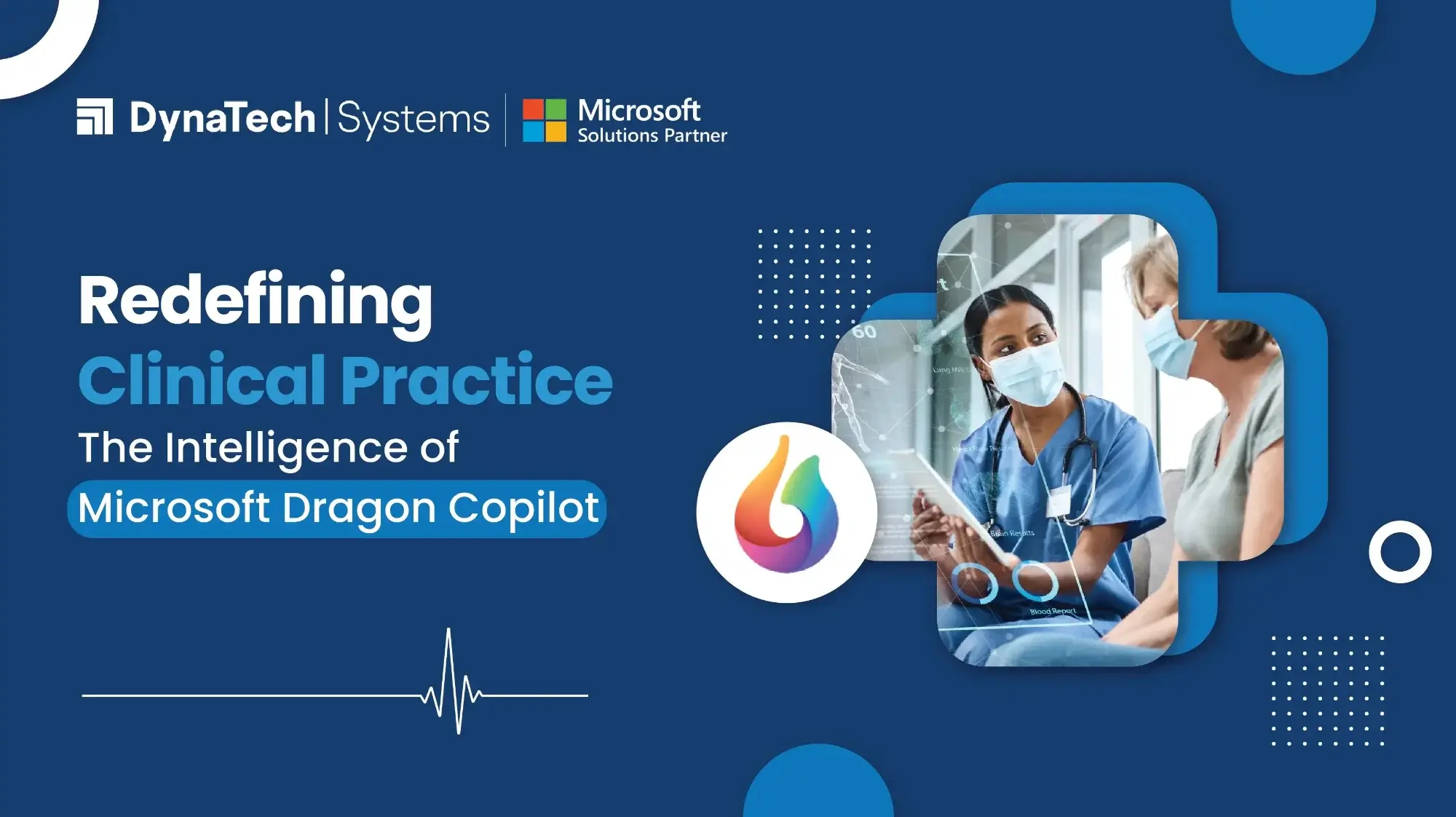
Redefining Clinical Practice: The Intelligence of Microsoft Dragon Copilot

Published on March 17, 2025 | Updated on October 30, 2026
Redefining Clinical Practice: The Intelligence of Microsoft Dragon Copilot

In healthcare, time is precious. Every minute counts, and how smoothly clinical documentation flows can make a huge difference. Dragon Copilot lets clinicians dictate their notes in natural language, and the AI instantly transcribes them into accurate medical documentation. This removes the burden of manual data entry, reduces errors, and saves valuable time, ultimately allowing healthcare providers to focus more on wholesome patient care.  

Imagine a world where healthcare experts are no longer bogged down by never-ending paperwork, administrative activities, and duplicate tasks that pull time away from what truly matters: patient care. That world is becoming a reality with Microsoft Dragon Copilot, Microsoft's AI clinical documentation assistant for healthcare.

In healthcare, time is precious, and how smoothly clinical documentation flows can make a huge difference. Dragon Copilot combines ambient listening to natural patient-clinician conversations with voice dictation, so notes get drafted automatically instead of typed after the fact. This removes the burden of manual data entry, reduces errors, and saves valuable time, allowing healthcare providers to focus more on patient care.

What is Microsoft Dragon Copilot? 

Microsoft Dragon Copilot is an AI assistant for clinicians. It combines two previously separate Microsoft and Nuance technologies: Dragon Medical One’s voice dictation and DAX Copilot’s ambient listening technology.

In practice, Dragon Copilot can take dictation and listen to natural patient-clinician conversations. It can then draft a structured clinical note. This is known as ambient clinical documentation. The AI listens in the background, so clinicians do not have to dictate every line.

Unlike a simple transcription tool, Dragon Copilot does more. It streamlines clinical workflows and handles repetitive tasks. It also surfaces real-time information. This helps clinicians stay focused on the patient instead of the documentation.

Ambient Clinical Documentation: How Dragon Copilot Listens and Drafts Notes

Ambient clinical documentation is the core capability behind Dragon Copilot, inherited from DAX Copilot. Rather than requiring a clinician to dictate findings line by line, it listens to the natural conversation between clinician and patient —with the patient's consent. It then drafts a structured clinical note from what was actually discussed.

The process generally works in three steps:

  • Listen: With consent, Dragon Copilot captures the natural conversation during the visit; no templates, no typing required during the encounter.
  • Draft: Shortly after the visit, it produces a structured note (history, assessment, plan, and other standard sections) rather than a raw transcript of the conversation.
  • Review and sign: The clinician reviews, edits, and signs the note. The AI drafts, but the clinician stays in control of the final record.

This is different from straightforward dictation, where the clinician is actively speaking the note aloud. Ambient documentation instead captures the conversation that’s already happening, which is why it's had such a direct effect on reducing after-hours documentation time.


Give Clinicians More Time for Patient Care

AI can take care of routine documentation while clinicians focus on what matters most. Discover what Microsoft Dragon Copilot can bring to your healthcare organization. 

Dragon Copilot Features That Support Clinical Workflows

  • Ambient listening that captures natural patient-clinician conversations.
  • Voice dictation for clinicians who prefer to speak notes directly.
  • Automatic structured note generation (history, assessment, plan, and other standard sections).
  • Multilingual conversation captures and dictation support.
  • Personalized note style and formatting per clinician preference.
  • Real-time patient data, lab result, and history retrieval.
  • Automated task support for scheduling, appointment reminders, and information retrieval.
  • EHR-ready output designed to drop directly into existing systems.
  • Extended support for nursing documentation workflows (added 2026).

How Does Dragon Copilot Improve Efficiency? 

1. Streamlining Clinical Documentation  

Whether a clinician dictates directly or uses ambient listening, Dragon Copilot captures the input. It turns the information into structured documentation. This can include patient information, prescriptions, medical histories, and diagnoses. The documentation is formatted to match the clinician’s preferred style. It is also ready to add to the EHR. This removes the separate step of typing up notes after the visit or navigating complex EHR screens field by field.

2. Automating Repetitive Tasks 

Dragon Copilot also enables healthcare professionals to automate regular tasks that take up substantial time. It can help them manage scheduling, appointment reminders, patient information retrieval, and so on. This helps healthcare professionals with enough time to emphasize offering improved patient care. This boosts efficiency and helps elevate overall patient outcomes.  

3. Real-time Information Retrieval 

With Microsoft Dragon Copilot, clinicians no longer have to waste time digging through piles of medical records or jumping between different platforms. Powered by the Microsoft Cloud for Healthcare, Dragon Copilot instantly pulls up patient data, lab results, and medical histories, giving doctors quick access to the information they need  through AI-powered health chart analysis.  This can also support AI-assisted early dementia screening, helping clinicians make faster, more informed decisions, reduce delays in diagnosis and treatment, and ultimately improve patient care. 

Microsoft Dragon Copilot Benefits for Clinicians

1. Enhanced Accuracy 

One of the most common challenges in manual documentation is a human blunder, whether it's misinterpreting patient data or improperly inputting treatment plans. Dragon Copilot allows us to minimize these risks by automatically transcribing speech into perfect text. This ensures that vital information, such as diagnoses, prescriptions, and medical histories, is recorded accurately every single time. This leads to more reliable patient records and fewer mistakes. 

2. Reducing Clinician Burnout

Healthcare professionals, especially doctors, often face a significant amount of administrative work on top of their demanding patient care responsibilities. This constant pressure can cause burnout, which is a rising problem in the medical domain. Dragon Copilot helps mitigate some of this strain by automating monotonous tasks and documentation. This gives clinicians more time to offer more care to their patients rather than being bogged down by paperwork, helping to minimize stress and promote an ideal work-life balance.

3. Improved Patient Experience 

AI assistants like Dragon Copilot not only help clinicians but also elevate the patient's experience. By decreasing the time healthcare providers spend on administrative activities, longer periods of time can be spent on face-to-face patient care. This shift allows clinicians to give patients the attention they need and deserve. This ultimately improves patient satisfaction and the overall quality of care. When doctors have to spend a minimal amount of time on paperwork, patients benefit from more thorough consultations and faster and more personalized treatment. 

Microsoft Dragon Copilot in Healthcare: Common Use Cases

Dragon Copilot for healthcare shows up differently depending on the setting:

  • Primary care visits: Ambient listening captures a routine visit end to end, drafting a note the physician can sign between patients instead of after clinic hours.
  • Specialist consultations: Longer, more complex encounters benefit from structured, specialty-relevant note templates that organize findings the way a specialist actually documents them.
  • Nursing documentation: As of 2026, ambient capture has extended beyond physician-only use into nursing workflows, letting care teams beyond just doctors’ benefit from the same documentation support.
  • Telehealth visits: The same ambient and dictation capabilities apply to virtual visits, so remote care doesn't mean falling back to manual notetaking.

Across all of these, the goal is the same: less time spent finishing notes after the patient has left the room.

Turn Clinical Documentation into a Smarter Workflow

Spend less time on documentation and more time focused on patient care. Explore how Microsoft Dragon Copilot can support clinical teams with AI-powered documentation and workflow assistance. 

The Future of AI in Healthcare  

The launch of Microsoft Dragon Copilot marks an exciting step forward in how AI is transforming healthcare. As AI technology continues to evolve, we're bound to see even more groundbreaking features that will reshape how healthcare professionals work and deliver care.  

The innovation of AI health assistants has just begun to rise, and as the healthcare industry becomes more familiar with these groundbreaking tools, we can expect even more significant innovation in clinical outcomes, operational efficiency, and patient satisfaction. In fact, studies have mentioned that over 70% of healthcare leaders have already started to adopt generative AI in their organizations by the year 2024. As investments in healthcare AI are estimated to reach $45.2 billion by 2027, it's pretty much evident that AI's role in healthcare is only going to grow stronger.  

Future advancements will likely comprise deeper integrations with diagnostic tools, predictive analytics, and decision support systems. These innovations will help healthcare experts with even more robust tools to take patient care to another level, boost efficiency, and make quicker, more shrewd decisions. The future of AI in healthcare is definitely bright, and it promises a new era of revolutionary and highly effective medical treatment. 

Concluding Statement 

Microsoft Dragon Copilot, powered by the Microsoft Cloud for the Healthcare industry, is capable of bringing unimaginable automation and advancements to healthcare professionals. This transformative AI assistant allows us to rationalize workflows by automating routine tasks, elevating clinical documentation, and offering real-time accessibility to imperative patient data. This leads healthcare experts to be able to save ample time, minimize human blunders, and pay attention to prerequisite activities such as delivering exceptional patient care.

As AI-powered assistants such as Dragon Copilot become more embedded in the healthcare sector, they contribute significantly to redefining the better tomorrow of the healthcare domain.

Frequently Ask Questions

What is Microsoft Dragon Copilot?

Microsoft Dragon Copilot is an AI assistant designed for healthcare professionals. It combines voice dictation and ambient listening to help clinicians create clinical documentation and streamline workflows.  

How does Microsoft Dragon Copilot create clinical notes?

Dragon Copilot can capture clinician dictation or listen to patient-clinician conversations with consent. It then uses the captured information to draft structured clinical notes based on the discussion.  

What are the benefits of Microsoft Dragon Copilot for clinicians?

 Dragon Copilot can reduce documentation workload, minimize repetitive tasks, and help clinicians spend more time with patients. It can also support more efficient clinical workflows.

Can Microsoft Dragon Copilot integrate with EHR systems?

Yes. Dragon Copilot is designed to work with healthcare workflows and electronic health record (EHR) systems. Its structured documentation can help clinicians add information to the EHR more efficiently.

Is Microsoft Dragon Copilot only a medical transcription tool?

No. Dragon Copilot goes beyond transcription. It combines voice dictation and ambient listening with AI-powered documentation and workflow capabilities to support clinicians throughout their workday 

How does Microsoft Dragon Copilot handle patient privacy during ambient listening?

Dragon Copilot only captures a conversation with the patient's consent, and the audio is processed to generate the clinical note rather than stored as a permanent recording. As a Microsoft healthcare product, it's built to meet HIPAA and other healthcare compliance requirements, though exact data handling and retention policies should be confirmed with Microsoft or your IT/compliance team as part of any deployment. 

Is Microsoft Dragon Copilot only for physicians, or can other care team members use it?

It's not limited to physicians. Dragon Copilot supports primary care and specialist visits. As of 2026, its ambient documentation capabilities have expanded into nursing workflows as well. This allows a broader part of the care team to benefit from the same automated documentation support, rather than just doctors.

Recent Blog

Navigate topics that matter most to your Dynamics 365 CRM journey.

What Is a Semantic Model in Power BI? Benefits & Best Practices

Power BI

Microsoft Fabric

Power BI Best Practices

Data Modeling


How to Know When Your Nonprofit Tech Stack Isn't Working

Membership Information Management

Non Profit


SQL Database vs Data Warehouse in Fabric: Which Wins?

Microsoft Fabric

Fabric Data Warehouse

Microsoft Fabric Architecture


Ready to Turn Insights into Real Business Impact?

Redefining Clinical Practice: The Intelligence of Microsoft Dragon Copilot

Redefining Clinical Practice: The Intelligence of Microsoft Dragon Copilot

Published on March 17, 2025 | Updated on October 30, 2026

In healthcare, time is precious. Every minute counts, and how smoothly clinical documentation flows can make a huge difference. Dragon Copilot lets clinicians dictate their notes in natural language, and the AI instantly transcribes them into accurate medical documentation. This removes the burden of manual data entry, reduces errors, and saves valuable time, ultimately allowing healthcare providers to focus more on wholesome patient care.  

Imagine a world where healthcare experts are no longer bogged down by never-ending paperwork, administrative activities, and duplicate tasks that pull time away from what truly matters: patient care. That world is becoming a reality with Microsoft Dragon Copilot, Microsoft's AI clinical documentation assistant for healthcare.

In healthcare, time is precious, and how smoothly clinical documentation flows can make a huge difference. Dragon Copilot combines ambient listening to natural patient-clinician conversations with voice dictation, so notes get drafted automatically instead of typed after the fact. This removes the burden of manual data entry, reduces errors, and saves valuable time, allowing healthcare providers to focus more on patient care.

What is Microsoft Dragon Copilot? 

Microsoft Dragon Copilot is an AI assistant for clinicians. It combines two previously separate Microsoft and Nuance technologies: Dragon Medical One’s voice dictation and DAX Copilot’s ambient listening technology.

In practice, Dragon Copilot can take dictation and listen to natural patient-clinician conversations. It can then draft a structured clinical note. This is known as ambient clinical documentation. The AI listens in the background, so clinicians do not have to dictate every line.

Unlike a simple transcription tool, Dragon Copilot does more. It streamlines clinical workflows and handles repetitive tasks. It also surfaces real-time information. This helps clinicians stay focused on the patient instead of the documentation.

Ambient Clinical Documentation: How Dragon Copilot Listens and Drafts Notes

Ambient clinical documentation is the core capability behind Dragon Copilot, inherited from DAX Copilot. Rather than requiring a clinician to dictate findings line by line, it listens to the natural conversation between clinician and patient —with the patient's consent. It then drafts a structured clinical note from what was actually discussed.

The process generally works in three steps:

  • Listen: With consent, Dragon Copilot captures the natural conversation during the visit; no templates, no typing required during the encounter.
  • Draft: Shortly after the visit, it produces a structured note (history, assessment, plan, and other standard sections) rather than a raw transcript of the conversation.
  • Review and sign: The clinician reviews, edits, and signs the note. The AI drafts, but the clinician stays in control of the final record.

This is different from straightforward dictation, where the clinician is actively speaking the note aloud. Ambient documentation instead captures the conversation that’s already happening, which is why it's had such a direct effect on reducing after-hours documentation time.


Give Clinicians More Time for Patient Care

AI can take care of routine documentation while clinicians focus on what matters most. Discover what Microsoft Dragon Copilot can bring to your healthcare organization. 

Dragon Copilot Features That Support Clinical Workflows

  • Ambient listening that captures natural patient-clinician conversations.
  • Voice dictation for clinicians who prefer to speak notes directly.
  • Automatic structured note generation (history, assessment, plan, and other standard sections).
  • Multilingual conversation captures and dictation support.
  • Personalized note style and formatting per clinician preference.
  • Real-time patient data, lab result, and history retrieval.
  • Automated task support for scheduling, appointment reminders, and information retrieval.
  • EHR-ready output designed to drop directly into existing systems.
  • Extended support for nursing documentation workflows (added 2026).

How Does Dragon Copilot Improve Efficiency? 

1. Streamlining Clinical Documentation  

Whether a clinician dictates directly or uses ambient listening, Dragon Copilot captures the input. It turns the information into structured documentation. This can include patient information, prescriptions, medical histories, and diagnoses. The documentation is formatted to match the clinician’s preferred style. It is also ready to add to the EHR. This removes the separate step of typing up notes after the visit or navigating complex EHR screens field by field.

2. Automating Repetitive Tasks 

Dragon Copilot also enables healthcare professionals to automate regular tasks that take up substantial time. It can help them manage scheduling, appointment reminders, patient information retrieval, and so on. This helps healthcare professionals with enough time to emphasize offering improved patient care. This boosts efficiency and helps elevate overall patient outcomes.  

3. Real-time Information Retrieval 

With Microsoft Dragon Copilot, clinicians no longer have to waste time digging through piles of medical records or jumping between different platforms. Powered by the Microsoft Cloud for Healthcare, Dragon Copilot instantly pulls up patient data, lab results, and medical histories, giving doctors quick access to the information they need  through AI-powered health chart analysis.  This can also support AI-assisted early dementia screening, helping clinicians make faster, more informed decisions, reduce delays in diagnosis and treatment, and ultimately improve patient care. 

Microsoft Dragon Copilot Benefits for Clinicians

1. Enhanced Accuracy 

One of the most common challenges in manual documentation is a human blunder, whether it's misinterpreting patient data or improperly inputting treatment plans. Dragon Copilot allows us to minimize these risks by automatically transcribing speech into perfect text. This ensures that vital information, such as diagnoses, prescriptions, and medical histories, is recorded accurately every single time. This leads to more reliable patient records and fewer mistakes. 

2. Reducing Clinician Burnout

Healthcare professionals, especially doctors, often face a significant amount of administrative work on top of their demanding patient care responsibilities. This constant pressure can cause burnout, which is a rising problem in the medical domain. Dragon Copilot helps mitigate some of this strain by automating monotonous tasks and documentation. This gives clinicians more time to offer more care to their patients rather than being bogged down by paperwork, helping to minimize stress and promote an ideal work-life balance.

3. Improved Patient Experience 

AI assistants like Dragon Copilot not only help clinicians but also elevate the patient's experience. By decreasing the time healthcare providers spend on administrative activities, longer periods of time can be spent on face-to-face patient care. This shift allows clinicians to give patients the attention they need and deserve. This ultimately improves patient satisfaction and the overall quality of care. When doctors have to spend a minimal amount of time on paperwork, patients benefit from more thorough consultations and faster and more personalized treatment. 

Microsoft Dragon Copilot in Healthcare: Common Use Cases

Dragon Copilot for healthcare shows up differently depending on the setting:

  • Primary care visits: Ambient listening captures a routine visit end to end, drafting a note the physician can sign between patients instead of after clinic hours.
  • Specialist consultations: Longer, more complex encounters benefit from structured, specialty-relevant note templates that organize findings the way a specialist actually documents them.
  • Nursing documentation: As of 2026, ambient capture has extended beyond physician-only use into nursing workflows, letting care teams beyond just doctors’ benefit from the same documentation support.
  • Telehealth visits: The same ambient and dictation capabilities apply to virtual visits, so remote care doesn't mean falling back to manual notetaking.

Across all of these, the goal is the same: less time spent finishing notes after the patient has left the room.

Turn Clinical Documentation into a Smarter Workflow

Spend less time on documentation and more time focused on patient care. Explore how Microsoft Dragon Copilot can support clinical teams with AI-powered documentation and workflow assistance. 

The Future of AI in Healthcare  

The launch of Microsoft Dragon Copilot marks an exciting step forward in how AI is transforming healthcare. As AI technology continues to evolve, we're bound to see even more groundbreaking features that will reshape how healthcare professionals work and deliver care.  

The innovation of AI health assistants has just begun to rise, and as the healthcare industry becomes more familiar with these groundbreaking tools, we can expect even more significant innovation in clinical outcomes, operational efficiency, and patient satisfaction. In fact, studies have mentioned that over 70% of healthcare leaders have already started to adopt generative AI in their organizations by the year 2024. As investments in healthcare AI are estimated to reach $45.2 billion by 2027, it's pretty much evident that AI's role in healthcare is only going to grow stronger.  

Future advancements will likely comprise deeper integrations with diagnostic tools, predictive analytics, and decision support systems. These innovations will help healthcare experts with even more robust tools to take patient care to another level, boost efficiency, and make quicker, more shrewd decisions. The future of AI in healthcare is definitely bright, and it promises a new era of revolutionary and highly effective medical treatment. 

Concluding Statement 

Microsoft Dragon Copilot, powered by the Microsoft Cloud for the Healthcare industry, is capable of bringing unimaginable automation and advancements to healthcare professionals. This transformative AI assistant allows us to rationalize workflows by automating routine tasks, elevating clinical documentation, and offering real-time accessibility to imperative patient data. This leads healthcare experts to be able to save ample time, minimize human blunders, and pay attention to prerequisite activities such as delivering exceptional patient care.

As AI-powered assistants such as Dragon Copilot become more embedded in the healthcare sector, they contribute significantly to redefining the better tomorrow of the healthcare domain.
Frequently Ask Questions

What is Microsoft Dragon Copilot?

Microsoft Dragon Copilot is an AI assistant designed for healthcare professionals. It combines voice dictation and ambient listening to help clinicians create clinical documentation and streamline workflows.  

How does Microsoft Dragon Copilot create clinical notes?

Dragon Copilot can capture clinician dictation or listen to patient-clinician conversations with consent. It then uses the captured information to draft structured clinical notes based on the discussion.  

What are the benefits of Microsoft Dragon Copilot for clinicians?

 Dragon Copilot can reduce documentation workload, minimize repetitive tasks, and help clinicians spend more time with patients. It can also support more efficient clinical workflows.

Can Microsoft Dragon Copilot integrate with EHR systems?

Yes. Dragon Copilot is designed to work with healthcare workflows and electronic health record (EHR) systems. Its structured documentation can help clinicians add information to the EHR more efficiently.

Is Microsoft Dragon Copilot only a medical transcription tool?

No. Dragon Copilot goes beyond transcription. It combines voice dictation and ambient listening with AI-powered documentation and workflow capabilities to support clinicians throughout their workday 

How does Microsoft Dragon Copilot handle patient privacy during ambient listening?

Dragon Copilot only captures a conversation with the patient's consent, and the audio is processed to generate the clinical note rather than stored as a permanent recording. As a Microsoft healthcare product, it's built to meet HIPAA and other healthcare compliance requirements, though exact data handling and retention policies should be confirmed with Microsoft or your IT/compliance team as part of any deployment. 

Is Microsoft Dragon Copilot only for physicians, or can other care team members use it?

It's not limited to physicians. Dragon Copilot supports primary care and specialist visits. As of 2026, its ambient documentation capabilities have expanded into nursing workflows as well. This allows a broader part of the care team to benefit from the same automated documentation support, rather than just doctors.


Get In Touch Get In Touch

Get In Touch